Season 5, Episode 4: Water Infrastructure, Engineering, and Climate Adaptation with John Take
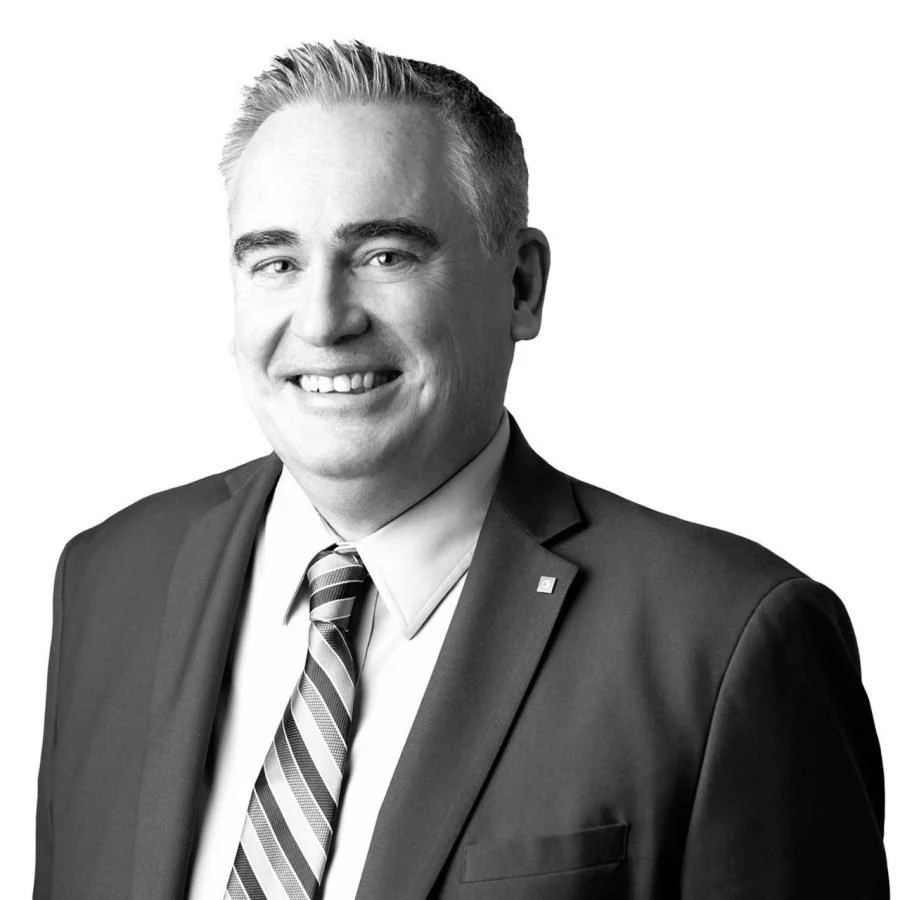
John Take, Vice President and Chief Growth and Innovation officer at the environmental consulting firm Stantec
Listen
John Take, executive Vice President and Chief Growth and Innovation officer at the environmental consulting firm Stantec joins John Sabo on the latest episode of Audacious Water to talk about how water infrastructure is evolving as climate change intensifies. He draws on more than 30 years of experience as an engineer working on complex water challenges, including post-Katrina New Orleans and long-term planning in the Colorado River Basin.
John explains how modern water projects are planned, who needs to be involved, and how the most successful projects now also depend on governance, financing, data, and meaningful community engagement.
“When we start to put together teams now, there’s still a client, there’s still a contractor, there’s still an operator. Who’s been added into the mix? It’s finance, it’s academia, it’s nonprofits, it’s philanthropy. We’re getting to better solutions because our team is so much more diverse.”
Key Topics
What Water Infrastructure Really Means in an Era of Climate Risk
John Take explains how water infrastructure must now be planned and designed to respond to climate-driven hazards, not just historical conditions.Why Engineering Is Necessary, but No Longer Sufficient on Its Own
While the technical engineering challenges are solvable, John emphasizes that governance, financing, and coordination increasingly determine whether projects move forward.How Water Projects Are Designed and Delivered Today
The conversation explores how water projects now rely on broader, interdisciplinary teams beyond the traditional client-designer-contractor model.The Role of Community Engagement in Climate Adaptation
John discusses why projects that fail to create clear “win-win” outcomes for communities are unlikely to succeed, regardless of technical merit.Why Water Security Is Critical to the Economy and Public Health
John highlights how water underpins economic activity and healthcare systems, and why disruptions to water service carry widespread consequences.
Links to Relevant Studies and Resources:
Read about John Take
Learn more about Stantec and its work in water infrastructure and climate adaptation
Explore the work of the U.S. Water Alliance, including research on the economic value of water
“The engineering is trivial, and I say that as an engineer who loves pumps and pipes and treatment plants. The engineering is something that we can do, but the social engineering to get to a win-win is the hardest hill to climb.”
Transcript
START (AUDACIOUS WATER SEASON 5 EPISODE 4)
JOHN SABO: Welcome to Audacious Water, the podcast at the center of water and climate adaptation. I'm John Sabo, director of the ByWater Institute at Tulane University. On today's show, what water infrastructure really means in an era of climate risk. My guest is John Take, Executive Vice President and Chief Growth and Innovation Officer at the environmental consulting firm Stantec. He has been working on water resources and water quality issues for 30 years. John draws on a long career of experience working on complex water challenges for this conversation. These experiences range from post-Katrina New Orleans to long-term planning in the Colorado River Basin. Today we'll talk about how engineering solutions are changing to meet today's climate realities, and why effective water infrastructure now depends on engineering working together with governance, finance, data, and communities. One upshot of this conversation, stakeholders come first now more than ever, and especially more than back in our days of graduate school.
JOHN SABO: John, welcome to the show.
JOHN TAKE: Hi John, it's great to be here.
JOHN SABO: Cool. So let's start off with the question about the strategy that I've been asking everybody. It's been 75 years since the first national water strategy was developed--why do we need a new one? Why is that so important?
JOHN TAKE: I think the national water strategy is important because it's been just that long. We need to recognize that our opportunities and our challenges have changed. We're striving to really understand and communicate the value of water, but we sometimes to agree on our priorities at a national level. Even the water is so local, and it tends to do a lot of work at the state level. I think we really need to agree on some of those national priorities to understand who's paying, and to leverage our national strengths and resources, even internationally as well. I think with a national water strategy we can build up from those local state/regional issues, which when you consider them, they actually rise to a national significance, and I would say international as well, as the geopolitical winds swirl around us. So I think it's all about starting with a good diagnosis. A good strategy really understands what's happening, it gets a group to agree on a guiding policy and approach. We need to have that at the national level. Because if we don't, then all the little actions that we do all across this nation, they won't be coherent, John. We'll be doing tons of things, lots of churn, but without a national water strategy I don't think we'll do everything that we possibly could do.
JOHN SABO: Well, there's a lot to unpack there. I like that answer a lot. Let's start with the strategy isn't published yet, the second one. It's coming out the 5th, I think, of February. So kind of in a movie-trailer mindset, what's in the new one that you like?
JOHN TAKE: There's a clear understanding that's being developed that water security really has to be preserved at that national level. Water is the backbone, not just to our economy, not just to the resilience of our society or the environment, but also is the backbone of our health and wellness. And the conversations that are happening around the national water strategy are starting to develop those concepts. And I think what I'm excited about is that we all see the challenges. There's - you know, throughout the 30 years of my career I've been lucky to participate in local water challenges with combined sewer overflows early on. I got to spend seven years in New Orleans after Katrina. I've gotten to work on some of the social and governance issues to the U.S. Water Alliance. And I'm currently focusing my career on the Colorado River. So the challenges are completely in our face, and it has helped me personally get to a spot where I recognize that without a national water strategy, again, boy, we're doing a lot of great things, but we could do better.
JOHN SABO: Super cool. And kind of to piggyback on your answer, one of the things that I noticed in, you know, our deliberations about the strategy over the last year and a half, and in going to the Aspen Water Forum for over a decade, is that so many things touch water. And it gets discombobulating at times, right? Like you just mentioned at least five different topics that in the academic space could be in different schools, right--public health, economics, and now you're talking about Colorado River water, which is, you know, there's not a field of study that doesn't fall under that category. I know because I had been in Arizona. So talk to me about how we consolidate that into a vision that resonates with everybody, you know what I mean? Like, I think we did a decent job, but at times I felt like there was just too much. So talk to me about that.
JOHN TAKE: I think the - arriving on that guiding policy and approach, you know, the idea that water security is essential to even the nation's security I think, but just leaning back into health, economy, and resilience, whether it's societal or environmental resilience. I think if we can get that guiding policy and approach correct, if we can then support it with good information to the public across the whole of our communities... I loved in the first couple episodes in the series you're talking to Martin and Newsha, and you're talking about the need for understanding of--I love how Martin put it--the value of not having to worry about water, or the value of water. And this national water strategy can reflect the fact that, you know, the federal funding share has gone from--at the time of that first strategy--maybe 50%, 60% of federal funding, down to single-digit funding, probably like 7% before the IIJA funding started to flow. But then--and this is something I really learned in New Orleans--99% of the O&M lands on the local community. And so to help our communities understand the gap in water funding, the value of water, we recently did some work through the U.S. Water Alliance that looked at the value of what would happen in a nationwide 24-hour service disruption, an $89 billion hit to GDP, $122 billion of economic output loss. And, John, it was in some industries that I wasn't expecting. The top four hits were in hotel and food service--food and beverage I understood--chemical and pharmaceutical, and then one I wasn't expecting was healthcare was in the top four industries across the nation that would be hit by water. So we have to tell our story about this critical role of water in the economy, and I think that'll lead to the prioritization that water deserves.
JOHN SABO: That's interesting. Those are some great statistics, and kind of hits the question, you know, with an answer right on the head, like a nail on the head. I like it. I'm impressed by the healthcare piece that you just mentioned. I'm waiting for a decision on a paper where we're putting together one water and one health into a single framework. And, you know, one of the upshots of that, that may or may not be relevant to what you just said but it just reminded me of this paper that's pending out there, is that in One Water there isn't a lot of public health in it, but there should be. And in One Health, for obvious reasons, it's not a water concept, but in the water realm it needs to consider the watershed as a unit for health, which I thought was kind of fun to think through.
JOHN TAKE: What I loved about that research is it finally got down to the state level. So for example, Louisiana, with the petrochemical industry and the petroleum industry, up to 40% of a state's economy, you can think you're gambling with that 40% of your economy. It was interesting to me how Louisiana, just with those ties through to petrochemicals and the petroleum industry and manufacturing, how high Louisiana was, and some states like Montana, Hawaii, Vermont, Michigan, when you look across what happens if you lose a day of water. I think it's really important that we get that understanding at a federal level, and then right down at the local city council level, particularly as land-use decisions are being made.
JOHN SABO: Super cool. Okay, let's go into a topic that I think you're poised to address. That's - I've tried to explain to people a lot, and it's the connection between water-related disasters and climate adaptation. And you guys are kind of right in the middle of that. Talk to me about that pipeline from, you know, project planning to M&E at the end, or the O&M that you talked about, is super important. So tell me how that works. Give me some examples.
JOHN TAKE: It's really interesting, John. So I've been at the same company for 30 years, came right out of grad school, and I've been working across North America on water resources and water quality issues. And too much water, not enough, is always my short hand. And in the last five years I've been stunned by the evolution of the teams it takes to deliver these adaptation projects. Whether they're traditional engineered solutions or nature-based solutions, it used to be, the first 25 years of my career, you had a client who decided what they were going to do, and they would hire an architect or a designer, and a contractor, and that was it. It was the client, the designer, and the contractor. And it's so exciting now that those partnerships, when we think about designing, conceiving, and creating adaptation projects in the natural and built environment, the partnerships now are just fantastic. We have to be able to deliver much more sophistication when we think about the economic case for the solution, the robust costs and benefits process. We are doing a much better job of considering the end users. Who is the off-taker for the project? Who's going to be benefitted? Who's impacted? And it's exciting to me that clients are starting to say, "What I really know is what my problem is. I'm going to be a lot more agnostic about the solution. I'm going to get the team that I need to get after this, and we're going to spend some time on process and evaluation." Early in my career we would do a master plan, you'd have a five-year CIP, and you would just execute. And five years later you'd finish those projects, you'd go to another master plan, and you'd fill up your bucket. And it was not dynamic, and it didn't change, and it didn't respond. So now we see sophisticated clients, they're evaluating the best solution for a project, and obviously it includes the technical. There's environmental and culture. There's regulatory. There's a greatly increased focus on social license and buy-in from the society and community, and then cost, financing, and economics. So when we start to put together teams now--because you have a problem and a team, and you can get it done--but that team, sure there's still a client, there's still a contractor, there's still an operator who's been added into the mix, which is a little new, but now it's finance, it's academia, it's non-profits, it's philanthropy. And so I'm seeing org charts to tackle these projects that are unlike anything I've ever seen before. And early days, but we're getting to better solutions because our team is so much more diverse. The downside, it takes longer.
JOHN SABO: Right.
JOHN TAKE: And the State of Arizona, for example, is working on their Colorado River opportunities, and they've set up a process for two years to just go knock on doors in the Colorado River neighborhood and identify partners. The number of partners makes it more difficult, so they've just focused in on a couple of neighbors that they can go and develop solutions with. And they're using this broader team, and they're spending the time to investigate the project, and then they're going to leverage things like private finance in the mix as well.
JOHN SABO: Wow. So let's drill down on partners and knocking on doors. Because I think when you say "knocking on doors," you're not talking about, you know, Edith and Archie at home; you're talking about, like, an imperial irrigation district, or a tribe, or something like that. So talk to me about that process of community engagement. Because as you know, here in Louisiana, with sediment diversion projects, we're suffering from not having knocked on enough doors, right, to a certain extend. We can come back to that, but let's stick to the Colorado example. Who are those partners?
JOHN TAKE: The interesting angle is that Arizona, when they started to look at their long-term water supply sustainability, they worked really hard to get their own house in order. Full wastewater reuse is the plan with direct-potable reuse legislation being developed, conservation, demand management, working to move from postage-stamp autonomy, very localized autonomy in water... You know, I have lots of people doing plans in Arizona, using different planning horizons, different assumptions around consumption rates and conservation rates, starting to get everyone on the same page. So while they got their own house in order, did all the critical work that you need to do close to home, they said, "We're also going to go out and have a long-term water augmentation plan that involves projects that are not inside the State of Arizona." The outgoing governor set up a billion-dollar fund--not enough to build these big solutions, but enough to run a process. And they decided, we're going to go out and we're going to find partners, whether that's Utah, or Nevada, or California, or Mexico, and jointly solve the problems that transcend the Colorado River Basin, the really (inaudible) desert sort of mega-region issues, but they're bringing a limited number of partners, they are starting to develop some high-level concepts, but fully recognizing that it's going to take a couple years to develop these concepts, to evaluate them. And the biggest focus, and I think the hardest hill for us to climb, is society and community. The engineering is trivial--and I say that as an engineer who loves pumps, and pipes, and treatments plants--the engineering really is something that we can do. But the social engineering to get to a win-win, my personal conviction is if it's not a win-win, it will not happen on the Colorado. Just forget about it. You have got to find those projects that everyone is comfortable enough just enough to live with it. And so the state's putting in that time to have that dialogue and process. And it's adding two years into the cycle, but the hope is that by taking that time you can actually get to a win-win across tribal interests, local interests, the state, the upper basin, the lower basin, the U.S., Mexico. There's some really exciting concepts that are coming forward, John.
JOHN SABO: Very cool. That's interesting, too, because I was not expecting you to go interstate on that answer. You know, bringing it closer to home in Louisiana, one of the things that I've been grappling with in research proposals, papers, and in just describing to people, you know, the scale of the issues that are in front of us, and what kind of engineering we need to do in order to respond to them from the adaptation point of view. And then people say, "Well, why don't we just do it?" And my answer is usually, "Well, it's really hard to balance from the decision-making point of view at federal state, all the way down to community. And so I think your answer of win-wins is spot on for some of the issues that we're facing with coastal restoration in Louisiana right now is that it needs to be a win-win, but within the state, right? It's a little bit different. Although you could say the funding comes from fed. But, like, Colorado is eight states or whatever, it's hard, nine states. You must have projects where it boils down to getting the communities on board with a system-level decision, right?
JOHN TAKE: Absolutely. You think about a farmer in the central valley of California, whose ability to pay for water is constrained by the agricultural market. They're going to get paid what they get paid for the products that come off the farmlands. They have water resources. They could develop additional groundwater storage facilities that could be used to capture water that currently is lost in the California system. There are runoff peaks, some of the atmospheric rivers. There's parts of California that are water-abundant currently, and we can take advantage of those opportunities, but not unless we can make it work for the farmer and make it more sustainable as they work through the groundwater-management issues in California, as they're working on their sustainable-groundwater-management act plans. We believe that by taking the time to build it up and to work from the farm level up to something that will work between California and Arizona, you can build all the storage facilities you want in Arizona--if we don't get the rain there's nothing to put in them. So there's a natural predisposition to try and capture water where it's actually raining, which is California, as we've seen lately. And early days, but it is exciting, and somewhat intimidating, to recognize that some of these early conversation that you go into, that we're not going to be able to force it if people aren't interested. If the win-win isn't there we've got to pivot and go find another angle.
JOHN SABO: Wow.
JOHN TAKE: It's going to take a lot of discipline.
JOHN SABO: Up next, John Take explains how modern water infrastructure projects actually come together, and why community engagement is just as important as engineering for climate adaptation efforts to succeed.
JOHN SABO: One of the things I've been struggling with, and I think it sounds like you're up against this same kind of wall, is it feels like you have to reach everyone to get that win-win, right? There's always going to be somebody who comes forward and says, "No, no, no, for this reason I don't want this in my backyard," right? How do you do that as a big company? How do you get there?
JOHN SABO: We have a very broad, diverse team, and it's about leveraging networks as well. It's not just the networks that the company that I'm employed by has. That's why, for example, we have academia. There are certain personalities within the Arizona academic space that literally everyone who's dealing with water management went through their courses. There's communities, you know, in academia, in business, we're using business associations, farming associations, manufacturing associations. And by going out and reaching them, and starting with listening, and avoiding the temptation of jumping to a solution, everyone immediately wants to jump to, "Oh, it's desal, desalination is going to be the holy grail," or "it's going to be conservation," or "it's going to be wastewater reuse." Avoiding the temptation to get to solutions too early by building the partnerships around a win-win, and understanding the off-takers, who are doing an incredible directed outreach--we're not, but the state is--of an outreach with the people who are going to actually pay for this water... And it will be probably more expensive. I think all the cheap water in Arizona is gone. And so as the price comes up, how and where are those off-takers interested? And it's, again, two years of discussions before we get to some projects that could be greenlit for financial investment.
JOHN SABO: Wow. This is a trip down memory lane for me, you know, not having been in Arizona for a long time. But yeah, I can imagine some of those academics that you're talking about and who they are, good colleagues of mine. Let's turn back to national water strategy for a little bit. Talk to me about infrastructure and what infrastructure means to you. And I'm asking an engineer this, so - but I'm not expecting the engineering answer here.
JOHN TAKE: No. It's really interesting, and certainly for Stantec. We began with a hockey player who was almost good enough for the NHL. He went and got one of the first environmental PhDs at Harvard instead. And whether it's our deeper roots back in the U.K. in the 1820s, or in the prairies of Canada in the 1950s, which was when the original water strategy in the U.S. was emerging, we started to really focus on designing with community in mind. And that's changed now. We're now thinking about more significant challenges, about the communities and infrastructure of the future, and climate solutions. And when it comes to infrastructure and adaptation to climate risk, when we start to look at the two of those together, for me infrastructure is how are we going to respond to the hazards? You know, we know that the hazards from the climate - how can we really think of the infrastructure that's needed for the people who are exposed? Where are those people? How are they being impacted by the infrastructure? And then we do get to capacity. And obviously infrastructure, there's lots of blue, and green, and gray infrastructure that we need. But as I was mentioning, we need a different team, we need different financial resources. So I think there's a measure of financial infrastructure, there's social infrastructure, the decision making, the ability to have a conversation on the Colorado River. We need more sophisticated social infrastructure. We need institutional and service infrastructure. And we need institutional in governance infrastructure as well. At the heart of it we start to get down to land rights, and uses, and planning norms, and investment decisions. Infrastructure is so much beyond what I studied in my undergrad, and in my post-grad degrees. So we start to look at a broader definition of infrastructure for sure. And right now I think, again, the engineered solutions, generally speaking, are achievable; it's the social, and the social infrastructure, and the governance that I think are the - going to be the most interesting hills to climb.
JOHN SABO: Yeah, I think that's an important point for the listeners, you know, just to call governance "social infrastructure" is taking a step beyond what probably most of us in engineering learned in the classroom, right? There's another piece that I think we've talked about before, too, which is the digital side of things, the cyber infrastructure has changed quite a bit. And talk to me about how you as an engineering firm are kind of embracing that to achieve some of the social infrastructure that you need in order to get these projects off the ground.
JOHN TAKE: Innovation, John, is so critical, as you know. Innovation I see as an accelerant to the tools and mechanisms that we have. And so innovating by tackling some of the systemic barriers, so that we can develop new technology at scale, tackling the fragmentation in the water industry, tackling the underinvestment in the industry, innovation in the areas of policy and governance. And then it's really exciting in our industry to see organizations, whether it's the utility, or a national lab, or a collection of agencies, figuring how are we going to better manage our data to leverage that data as we go forward? By following the lead of some of the tech companies we see around us, how they are starting to work with strategy and policy in the age of AI, what they're doing differently with data, and how we can move from a siloed data approach to a more uniformly-available and accessible, to where we can have our data and then have layers of applications and teams that sit on top of it. So we've got to innovate on tech, for sure, but also network structures, processes. I think client engagement - we were talking about how do you get out and reach those people? I think we need to--and this is the value of the national water strategy--we need to innovate on our brand as the water sector. And we even had big discussions about, well, what is the water sector and who's in that bucket? I don't even like that term [LAUGHTER].
JOHN SABO: Hey, this is making me think, too, of discussions we've had on the cyber side of how many different things water touches, and that each of those silos has its own set of models that are hard to integrate with water models and data. You guys are working in that space I think, right? Like, trying to homogenize that a little bit?
JOHN TAKE: Absolutely. We find our best solutions when we bring all of our team to the table. And that might be out of the community development arena, land-use planning. It may be out of the buildings area, where we're really focusing in on doing more adaptive reuse of buildings than new construction. It certainly involves the energy business that we're in, and our environmental services, and our nature-based solutions practices as well. So we try and bring our architects, our engineers, our scientists, all to the table to put together those teams that don't look like the teams that I started out with back in the 1990s.
JOHN SABO: Yep. Okay, a couple of ideas just maybe as our final topic to address here. One is - these are two sets of ideas that are maybe not completely connected, but I think you'll see where I'm going with them. First one is, you know, we're one year away from the 100th anniversary of the great flood of the Mississippi, which precipitated a lot of infrastructure building, right? There's a levee from the mouth of the Mississippi in Venice all the way to Minneapolis, let's just say. More river miles, a levee, than river miles in some cases, right? So that's a response that was incredible. But it did the trick in some cases, right? The (Corps) will say, "We haven't had a failure since." The (Corps) will say, you know, "There were ten possible major floods that were averted based on this infrastructure." You know, those are results. And so the question that I want to ask you, given that we have climate change--and this doesn't have to be focused on the levees of the Mississippi or the (Corps); this is more broad than that--but what scale do we need to build on? You know, what's the scale at which we need to build and what does that look like in order to confront the changes that we're already seeing but we're going to see more of between now and 2050? How do you describe to somebody how big that needs to be?
JOHN TAKE: It's a fascinating question because we have issues obviously that are very local. And they're down on my street, on my cul-de-sac in my neighborhood. We have other issues that we will not get to a good solution unless we consider the larger systems, the larger solutions. And so we're going to need to have this national water strategy that allows for progress at multiple scales. And so I certainly think local/state/federal. I think watershed. And I think some of the mega-region type approaches to where, yes, we can worry about the Colorado River, but that's part of a larger ecosystem as well, the Sonoran Desert. And so I'm thinking that we need to be able to go from the top of the watershed, for example, with our solutions. You know, in Arizona lots of interest in what's happening with the forested parts of Arizona. All the divides in any given locale, all of our jurisdictions are incredibly diverse. You know, just in my home state of Arizona I think about rural versus urban. Maricopa County is such a, you know, such a powerful part of Arizona, and we have all the other counties in Arizona. We have ag, we have municipal, we have industry. So ultimately every project is local. But if you're going to get the right solution and you only look at the local constraints, your local interests, you may or may not get to the right solutions. So, you know, just like on the Mississippi, you know, you've got to start with everything on the coast, but you've also got to go upstream some distance for some of the projects to make sure that you're not creating some of those unintended consequences that we've seen pop up in the past.
JOHN SABO: [What] I like this answer because it's something I've been thinking about a lot, which is, you know, 90% of natural disaster damage is water-related. And that's part and parcel with climate adaptation is disaster avoidance, you know, preparation for disasters with the appropriate combination of infrastructures, which we've talked about, you know, the social, the cyber, the natural, the built. And to a certain extent I think, you know, the watershed is the unit at which that all transpires. And so it's the appropriate unit for adaptation. I would argue some of those watersheds are enormous, the Colorado and the Mississippi, and they're hard monsters to tackle from the especially social infrastructure point of view, right? So I like that - I think that's consistent with the way I've been thinking about it, but it really helps kind of articulate that boundary I think. And you and I are water people, so yeah, it makes sense that the watershed is the boundary. It doesn't make sense from a social standpoint often, because states don't follow those boundaries, right? Compare kind of, if you can, compare the challenges that you've faced and overcome in the Colorado and some of the lessons that we might learn from that in the Mississippi, given it's a bigger basin, but also has aridification in it, right?
JOHN TAKE: Most recently, just before the holiday season I was in Las Vegas for the Colorado River Water Users Association. And as I'm sitting in the crowd for yet another year I was really struck this year in December by the community that was present. The sheer size of the community that gathers on the Colorado River, having discussions that date back well into the 1920s, wrestling with infrastructure that can take 20, 30 years to develop, design, finance, construct. Wrestling with the fact that at the end of this year we need to have some new operating roles for the river. And through the draft environmental impact statements and the work that the federal government's doing, the negotiations happening at the state level, and then you've got all of the seven basin states also working on all of their own individual activities, very proud of the work they're doing in conservation and demand-management. And I was really impressed by the community is amazing, the community is resourceful. We need to transcend some of those barriers that we love to put up between the different parts of the community. And if we can do that I think that community will have served the Colorado River and the community that depends on it, all 40 million plus of us. It's interesting, when I look at the Mississippi, to think about what's that similar community look like on the Mississippi? What's it look like on the Columbia, you know, our major rivers that - back in 1951 that first strategy focused on 10 rivers. What's happening with all those communities? Are the right people in the room? Certainly the tribal communities are incredibly well-represented, the indigenous communities within the Colorado River. That's a relatively new thing in the scope of 100 years on the river. So I always end up with, you know, being an eternal optimist, having faith in that community that cares enough to get together, and yes, argue, and yes, debate, and also do the (solutioneering) and be striving to reach out and, again, like I said, knock on doors and see what we can do together.
JOHN SABO: Super cool. I am thinking about CRWUA transpiring in Las Vegas right before Christmas. And so maybe as kind of a funny end point, what do you think the Las Vegas for Mississippi will be? Is it going to be - yeah, what... I agree with you, I never thought about CRWUA before, but in the context of the Mississippi I think we need it. But I think there's a draw also. There's a place to go that people love to go to. We need the same - maybe it's New Orleans, I don't know.
JOHN TAKE: Oh, for me it's New Orleans. I fell in love with that city during my time there. I miss it dearly. And so you look at the communities in the upper Mississippi and all the way down to Louisiana--that broader community gathering, do you see a parallel out there like CRWUA on the Mississippi? Maybe the Mississippi works too well right now, John. Maybe it needs a little more stress and then that community is going to have to get together. How do you see it?
JOHN TAKE: That stress is right on the - you know, knocking on the door right now I think. Aridification in the east, intensifying storms. I mean, I know Texas is in the basin, but the floods and flood damage that we saw there is just around the corner in other places in the Mississippi River Basin. You know, what I think about a lot is what you were talking about, unintended consequences of projects and how they may - you know, projects upstream may have impacts downstream that are not wanted. And I think we need a planning process or a venue like CRWUA where we can talk about what's happening basin-scale and basin-wide, and people can say, "Hey, you know what? Those setback projects are going to help us downstream by delivering sediment for coastal restoration. So let's try to promote that, you know?" And so we get to the point where it's a win-win, you know what I'm saying? We don't have that. I would say there is the Mississippi River Commission, right, is probably the fulcrum for setting that up. I don't see the (Corps) and Vegas as being two things that you put together. But there is a lot of (Corps) presence in New Orleans. So I think, you know, I could imagine an annual meeting that did that. Likely it would probably have to rotate between lower basin, middle basin, and upper basin, kind of in a way that the Mekong River Commission rotates between the four member countries. But we need something like that I think, so I'm glad you brought CRWUA up. I never thought about it, but it is the mechanism for that kind of community-building, right?
JOHN TAKE: It was a fascinating takeaway as I sat there surrounded by thousands of people, some of which had been going to CRWUA meetings for 40 years, 50 years. CRWUA celebrated an anniversary this year, and it was interesting to talk to people about who'd been there the lonest. And I would argue on a lot of our major rivers, particularly the Mississippi, that sounds exciting to me to build an association like CRWUA. What would that look like for the Mississippi? It's an interesting idea.
JOHN SABO: Very cool. Well, I think that's a good place to end this interview and discussion, John. It's been a pleasure to talk to you. I learned a lot; I hope you did, too. And thank you so much.
JOHN TAKE: Thanks, John. Really enjoying the podcast; I can't wait to listen to your other guests.
[MUSIC]
JOHN SABO: Okay, that's a wrap for a great chat with my friend John Take. One upshot that I think is really important, John says that we have to tell the story of critical water plays in the economy, so that water is prioritized. What are those plays? I think first and foremost it's in the realm of disasters, one pillar of the national water strategy which will be released in less than two weeks. Why disasters? Ninety percent of natural disasters are water-related--droughts, fires, floods, sea-level rise, and tropical storms, as I say very often on this podcast. All of these are happening more often than they did 75 years ago, upon the release of the first national water strategy. And we spend a lot on cleaning them up, to the tune of seven percent of the national debt. Yes, in the trillions since 1980. And that is just the sum of the disasters that exceed $1 billion in cleanup costs. How do we downsize this repayment? I think the answer is in prepayment, innovative infrastructure that adds adaptive capacity and prevents disasters in the first place before they occur. This infrastructure has to be a combination of built, natural, cyber, and social infrastructure components. And infrastructure is another pillar worth reading in the forthcoming strategy. The social part of that infrastructure package is key. John Take mentioned stakeholders and community engagement as a key part of projects that Stantec takes on. There is more social infrastructure than when he and I were in graduate school. Why? Projects need to make sense locally and system-wide. You can't build a coastal defense system without consulting communities who will bear the burden of the construction in their backyard for the greater good. This is a key takeaway. How do we confront (nimbyism) with smart, maybe even cyber infrastructure that gives communities access to science and the decision-making process? I think in less than 10 years we will be (stakeholdering) through online decision-making games that provide more democratic access to science and decision-making tradeoffs for non-specialists. And it will do this in ways that depoliticize the decision-making process itself. Imagine you, the community member, with projects slated for your backyard, in the seat of the decision-maker, making decisions online with the decision-makers about the same tradeoffs. Thanks for listening.
[0:36:31]
END (AUDACIOUS WATER SEASON 5 EPISODE 4)