Season 5, Episode 3: Innovation, Data, and the Future of Water Management with Will Sarni
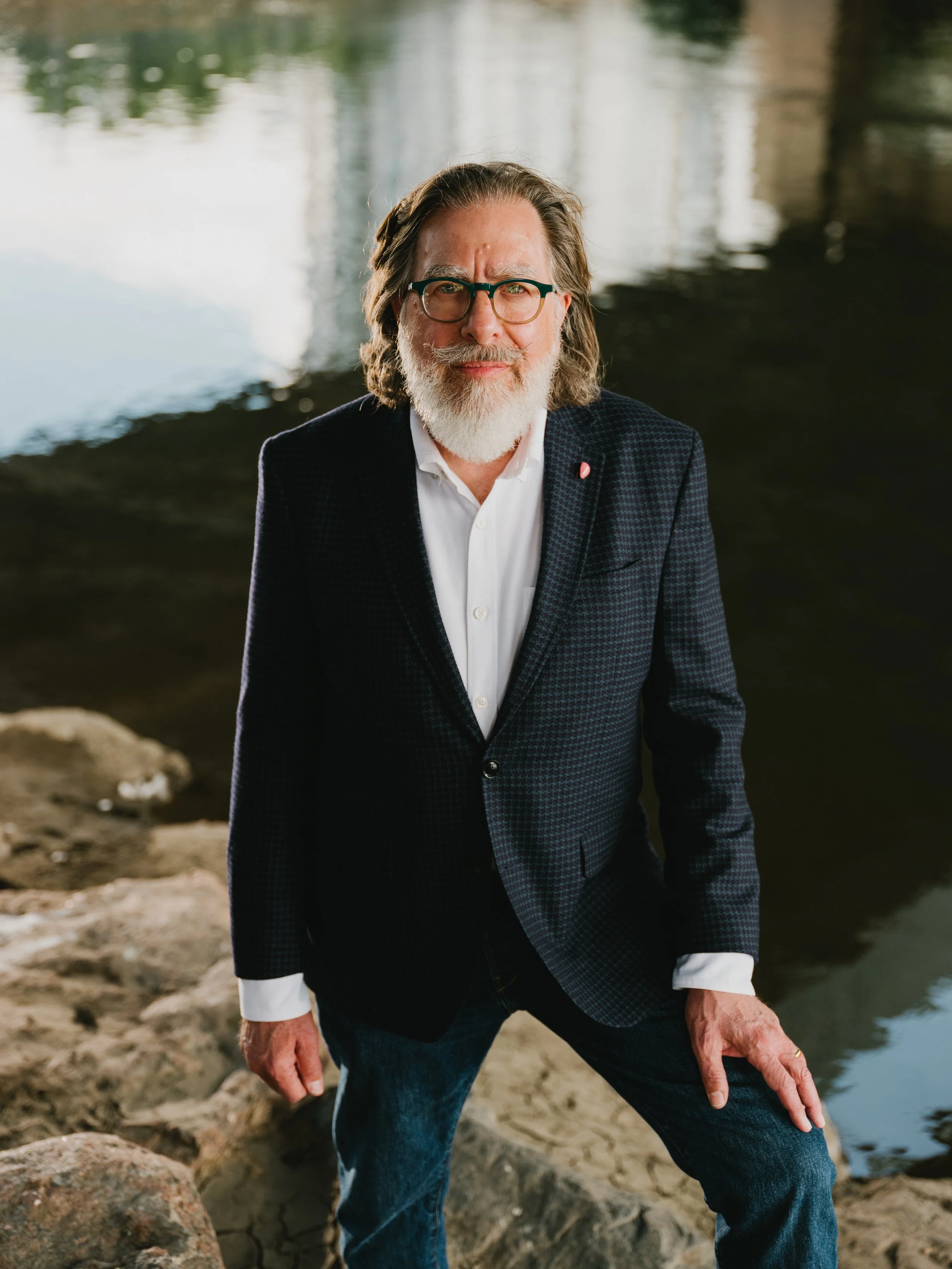
Will Sarni, Practice Lead, Water and Nature at Earth Finance
Listen
Globally recognized water strategist Will Sarni joins host John Sabo to continue the conversation on why the U.S. needs a new National Water Strategy and to discuss what innovation in the water sector actually means. Drawing on decades of experience working across the private sector, finance, and public policy, Will explains why water must be treated as a strategic resource and how industries from agriculture to data centers depend on reliable water supplies. They explore the role of finance in scaling solutions, the difference between incremental and disruptive innovation, and why the future of water management depends not just on more data, but on turning data into actionable information, especially as climate change intensifies water-related risks.
“We need to really think about water as a strategic resource, and how do we manage it accordingly - not just have regulations, but we need a rudder on the ship considering how incredibly important water is.”
Key Topics
Why the U.S. Needs a New National Water Strategy (01:10): Will explains why a 75-year-old framework no longer works in a world of rising demand, aridification, and groundwater depletion, and why the country needs coordinated national direction for managing water.
Water as a Business Risk Across the Economy (04:02): Will explains how industries from agriculture and apparel to semiconductors and data centers depend on reliable water supplies, and why water availability and quality are increasingly a risk to businesses.
The Role of Finance in Water Solutions (07:30): Will discusses why philanthropy alone cannot sustain water infrastructure, conservation, and watershed health, and why financing mechanisms are essential for scaling solutions across sectors.
What Innovation Really Means in the Water Sector (09:00): Will challenges the overuse of the term “innovation,” distinguishing incremental improvements from disruptive change and emphasizing that innovation includes partnerships, financing, and business models - not just technology.
Turning Water Data Into Actionable Information (12:24): Will argues that more data alone won’t solve water challenges, stressing the need to translate real-time data into information people can actually use, from households and farmers to utilities and policymakers.
Water’s Role in Climate Adaptation (25:40): Will notes that climate change disrupts the hydrologic cycle, making precipitation less predictable, and emphasizes the need to adapt water infrastructure to changing conditions.
Links to Relevant Studies and Resources:
Learn more about Will Sarni’s work at Earth Finance
Further Reading:
Corporate Water Strategies by Will Sarni explores how companies assess and manage water risk across operations and supply chains, providing context for the episode’s discussion of water as a business risk and strategic resource.
Profiles of the Future: An Inquiry into the Limits of the Possible by Arthur C. Clarke (1962): Will quotes Clarke’s observation that sufficiently advanced technology should appear indistinguishable from magic while discussing trust, usability, and decision-making in water management and AI systems.
“There are a number of different perspectives on this, which is we need more data and if we only had more data, then life would be good. I have a different view, which is, we need actionable information. ”
Transcript
START Audacious Water Season 5 Episode 3)
JOHN: Welcome to Audacious Water the podcast at the center of water and climate adaptation. I'm John Sabo, director of the ByWater Institute at Tulane University. On today's show, what does innovation in the water sector actually mean? My guest is Will Sarni, a globally-recognized leader in water strategy, technology, innovation, and investment, and Practice Lead for Water and Nature at Earth Finance. Will has been in the biz for many decades, and has been, and always will be one of the top-shelf consultants. Will and I will talk about why the U.S. needs a new national water strategy, how AI could support water management, and what turning water data into actionable information really looks like.
JOHN: Will, welcome to the show.
WILL: John, excited to be here. Great way to close out the week.
JOHN: All right, Friday. It's almost Miller time on a Friday, right?
WILL: Yes.
JOHN: All right, let's dive in. It's been 75 years since the U.S. had a national water strategy. Why is it important now to have a new one?
WILL: It is so - 75 years is a long time, you know? I mean, I don't know what the rush is, but... There is increasing demand for a finite resource from traditional sources. So, you know, we're seeing the increase in data centers, demand for cooling water, but also, you know, urban development, built environment, the need for sustainable and productive agriculture. So the, you know, demand side of the equation is growing and we're seeing the impacts of, in the American west, the aridification, which is resulting in the Colorado, in particular, having less water for increasing demand. And then we're also seeing, you know, the cascading impact on groundwater. So less surface water, people pump more groundwater, the faster that recharges. So we need to really think about water as a strategic resource and how do we manage it accordingly. Not just have regulations, but we need a rudder on this ship, considering how incredibly important water is.
JOHN: I want to turn this towards Economy, because you've talked a lot about this and you've obviously worked in the private sector a lot. So why do we need to think about this as a strategic resource, and how do we create that in the financial sense, you know what I mean?
WILL: Sure. Yeah, so what I talk about is the value of water for business growth, economic development, social well-being, and ecosystem health. And we need to be framing water as critical to all of those needs. And, you know, those needs don't sit in silos; they overlap quite a bit. You know, the bulk of the work that I do is with U.S. and non-U.S. multinationals on building a water strategy that understands water as a business risk, quantifies that, and then develops interventions to mitigate that risk so companies can have business continuity and business growth. One thing that I've talked about through the years is, you know, how water can fuel business growth. And you need water for everything, so for me that's why we need a strategy, why it's important to frame this in a different way--value, economic sense, and business sense, and even, you know, ecosystem health. You know, you can put a value on top of that.
JOHN: Let's dig into the corporate perspective a little bit. And you and I have a lot of shared experiences in this space. For the listeners, talk about the different sectors that need water, because I think most of the listeners will probably think of bottled water and maybe Pepsi and Coke. But take us on a journey there.
WILL: Sure. So food and beverage companies is, you know, a good place to start. But, like, you know, let's strip out bottled water from the conversation and look at, you know, what they manufacture. They manufacture beverages, you know? So fine spirits, beer, energy drinks, whatever it may be. So you need water for the product, but you also need water in the manufacturing. And those products typically have an ag supply chain. So beer, for example, has a very robust ag supply chain, and you need water for the product, you need water for the manufacturing, and you need water for the agricultural production. Automobiles, heavy manufacturing. You need water for paint shops, metal fabrication, semi-conductors, fabs. You need ultra-pure water in pretty significant quantities to make computer chips. So any consumer product manufacturing, specialty manufacturing, like semi-conductor chips, and then heavy manufacturing. And, you know, we're seeing data centers that need water for cooling, at least right now with the status quo tech. So there's just this, you know, convergence of every industry sector that requires water, you know, either in their supply chain or their operations. Oh, and one sector I left out was apparel.
JOHN: Big one.
WILL: Yeah, big one. So, you know, if you are an apparel company and the vast majority of your products are cotton, then you need water to grow cotton. And that's really critical. So yeah, I mean, even synthetics.
JOHN: I mean, at a basic level this is, like, Gap, H&M, Levi Strauss...
WILL: Yeah.
JOHN: ...everything that makes it to Wal Mart and Target.
WILL: Yeah, exactly. You know, VF, Nike, all of them have carefully-thought-out water strategies where they can understand how much water they need currently and projected, and what the risk is to their availability of water to manufacture what they manufacture. So that's where I fit. That's where we fit. And, you know, so to help the companies understand water as a business risk and how to mitigate the risk, and then the mitigation side of it, you know, obviously as they're trying to sell (inaudible) on technology innovation, but innovation partnerships, you know, head of finance, some of these interventions, and so on.
JOHN: Right.
WILL: And so not the only closing thought, but one closing thought is that, you know, for everybody just look around you and appreciate that everything in your home and your transportation requires water.
JOHN: Amen, yep. That's a great overview. Let's pivot a little bit, because you had I have been in meetings for the last couple years for the national water strategy, and I had kind of an ah-ha moment at some point. Because the group as a whole was talking about the private sector, and I thought I understood what the private sector was, which is what we're talking about right now. And it was a different thing. It was the financial part of the private sector. So talk to me about that and why that part is important.
WILL: Well, you know, you have to finance everything, you know, assets, public-sector assets. I'm having a conversation right now with a colleague that works for a non-profit NGO who's very big in the conservation and ecosystem health, biodiversity. And how do you finance conservation and healthy watersheds that are critical for communities and for businesses? That's just really important. You know, if you rely on philanthropic funds, then that's pretty tenuous. You know, you're sort of always out looking for funding. So how do you finance some of these initiatives that are critical to both the public and the private sector in civil society? It has never been more important than now.
JOHN: That's great. So the financial piece is important of the private sector because it takes us to the next topic, which is innovation. And I know in my previous interview with Martin and Newsha, Martin was, like, "I am not innovative. I didn't want innovation as one of the pillars of the strategy, but she got it because I wanted rural." Basically in a nutshell how that transpired.
WILL: [LAUGHTER] I didn't know that.
JOHN: But I think the question is on innovation, it's one of those words that it's used so often that it loses its meaning sometimes, right? So, like, if everything's innovative then is anything really innovative? What is innovation? What is it in the water space? Talk to me about that, Will.
WILL: So I agree with you. You know, people throw that around with reckless abandon. I would just say that disruptive innovation is, like, people say that all the time. And the question is, is that truly disruptive? And most of the time it's really not. So I'll just start really high-level. I have learned that thinking about innovation needs to be broader than technology. So there's innovation tech, innovation in partnerships, innovation in financing, and business models. So if you look at it that way, the (palate) for solutions becomes broader. Now, what is innovation? Innovation can be incremental. So, you know, a modest improvement in a treatment technology, or water efficiency, or leak detection. And I would say the bulk of innovation has to do with making incremental improvements on a process of some sort, attack. Disruptive is something that people hadn't thought about. And I would put air-moisture capture in that category. So the ability to tap into a water source that historically - not that people didn't think about it, but they did not have the technology available to capture that. And within that category there are a number of really, really interesting technologies that, you know, at least have the promise of delivering water from a different source. Desalination initially was - that was disruptive. It was a different source of water. So that's very broadly how I think about innovation, and the categories, and how I would put a fine point on what is disruptive vs. what is just incremental improvements. And I didn't realize that innovation almost didn't make it into our dialogues and strategy. It would've been inconceivable for me if it wasn't.
JOHN: I can tell they talked to you about it, because what you just said is consistent with the conversation that I had with them. Which was, like, it can't be just about widgets; it's got to be about other things, right?
WILL: You know, I'm happy that my fingerprints are there, John. It's a good thing.
JOHN: Well, I told them when I was interviewing them, that I was interviewing you next. And Newsha chuckled with, you know, that warm chuckle that she has, right?
WILL: Yes - yes.
JOHN: All right. Okay, let's dig into data. Because, like, I feel like innovation, like, in this day and age, we can't talk about innovation without talking about data. And it's a double-edged sword. So give me some material there about double-edge sword of data. Like, it's a solution but it's also a challenge, right?
WILL: Well, you know, there are a number of different perspectives on this, which is we need more data. And if we only had more data then life would be good. I have a different view, which is we need actionable information. So I acknowledge that we absolutely need real-time data to make informed decisions. And, you know, analog approaches to managing assets is just not going to cut it anymore because of the dynamics that we talked about just a few minutes ago, which is declining traditional sources of water, increasing demand, and so on. You really need to know on a real-time basis how things are performing in terms of source and asset performance, and so on. So, you know, clearly better data, real-time data, but turning it into something that is actionable, not just for professionals, but for the layperson. So, you know, we have dumb water homes right now...
JOHN: Amen.
WILL: ...for the most part. We don't know how much water we're using. We don't know the quality of water that comes out of our tap on a real-time basis. So how do we leverage technology so the layperson understands not - you know, it doesn't have to be a lot of detail, but, you know, just enough to know that, "Hey, I live in a home that stretches that gallon of water as far as it can go through reuse and real-time monitoring," and that just gives you all sorts of possibilities in terms of urbanization or how to operate off-grid. So yeah, that's my comments on data. You know, and I think we've gotten better in terms of tapping into satellite data, so geo-spatial analytic, you know, data exposition and analytics, coupled with on-the-ground sensors to have a more robust, meaningful understanding of the critical resource water.
JOHN: Up next, we continue our discussion on turning water data into information people can act on, and why that shift matters for the future of water management.
JOHN: I have so many thoughts and avenues to pursue based on that response. I mean, one of them is, you talked a lot about the end user being somebody in the household, which I agree with wholeheartedly. Give me one or two other use cases of where data needs to be translated into actionable information, as you said.
WILL: Sure. Agriculture, you know, is a really good example. So farmers historically use their experience and their judgment in providing inputs, which would include water, to increase the probability that they have a crop in any given season. Well, the ability to couple on-the-ground sensors that are providing information on nutrients, water availability, productivity, and remote-sensing data--so, you know, aerial drones and geospatial data--gives you a stack of data and information that enables the farmer to understand what the interventions look like, the choices, and how to really deliver exactly what his or her crops need so we have a sustainable and resilient ag sector. So that's important use case. The built environment, like I said, the (home) or commercial buildings...
JOHN: What about the Colorado River?
WILL: Well, yeah, that too. You know, it's interesting you bring that up. Over the years there have been, you know, discussions about, well, how do you basically create a digital representation of a watershed and tap into publicly-available data, private data that you could anonymize and use that as a way to make better public policy decisions? So John, can you imagine making, like, really smart public policy decisions in a watershed?
JOHN: Humans in a loop or not?
WILL: [LAUGHTER] Oh, that's a whole other episode, by the way.
JOHN: Right, totally. But that's kind of what I'm driving to. Like, I think a digital twin of the Colorado is what you're talking about. And, yeah...
WILL: Yeah, well, absolutely. I mean, we have digital twins of assets--you know, jet engines and utilities... You know, it's interesting, several months ago I had the opportunity to go to Korea and meet with K-water. You know, that is the national water agency. And, you know, I was in a conference room and they said, "Oh, would you like to see our data center?" And, you know, the curtains pulled back and here was this, like, NASA-like...
JOHN: Wizard of OZ.
WILL: Oh, I just looked stupid, you know? You know, mouth open, absolutely speechless. And, you know, it was essentially, you know, a digital twin of their hydrologic system and their hard assets. And that's what we need. I mean, there's no reason why we shouldn't have it, except policy and funding. But it was mind-blowing. So to point, yes, that's what we need. We will make better choices if we had the data, information, in a way that is understandable graphic information that's simple.
JOHN: Super cool. I mean, where I sit in the ByWater Institute with a very capable data scientist at our side, I can see a world where... You know, we have this new tool called "ChatGPT," which people are suspect about, right? And large language models in general people are suspect of. But I can see a world where Chat becomes and agent who you ask questions about how to manage your water resources. And that agent is programmed to pull from data from your county or your watershed, and delivers you the model that you want, and tells you with some certainty what the outcomes are going to be, right? Is that not where we're going?
WILL: Right. Well, I hope so. I mean, you know, asking a question to a large-language model about what's going on in my house? So, you know, give me a readout of water efficiency. You know, do I have enough water for water purpose? What's going on in my neighborhood? What's going on in my community? What's going on in my state in the watershed and so on? And so the ability to just ask a question and get data back - well, not data back - to get answers, that is really, really important.
JOHN: For sure.
WILL: I'm a big science-fiction fan, and there is a quotes, and I forgot the author, but it was basically something like, "Advanced technology should look like magic to the layperson." And I love that because I don't want to know how things work, I really don't. I just want them to function. So to your point about asking a thing, a question, and getting something back that I can act upon, and not have to know all the gory details, is important.
JOHN: Well, that solves a huge problem, too, which we've talked about a lot, which is - is that there's a silver tsunami in water management right now.
WILL: Oh yeah, yeah.
JOHN: And replicating the knowledge base that's leaving the workforce is a huge issue. Modifying the way that we approach that with AI and large language models, and learning from their collective experiences through documents, is one way to bridge that gap, right?
WILL: Absolutely agree with you. I see it as two things. One is, how do we ensure that the knowledge doesn't walk out the door, never to return? So taking that knowledge base that professionals have accumulated over decades and delivering that to young professionals that are just coming into this sector is really critical. And then the second piece is, you know, tied back to the question that you asked. So how do we take the knowledge, couple it with AI applications, to give us a menu of decisions that we can act upon, or, you know, with guardrails, have the AI agent make the call based on the knowledge base that has accumulated over decades?
JOHN: People ask me all the time, like, how is that going to be safe? I'm, like, well, Waymo is driving all over Phoenix right now.
WILL: [LAUGHTER]
JOHN: You know, and it's taking people on Uber rides right now. Like, how is that any different than making a decision about flood forecasting, right?
WILL: Well, you know, I think it's crazy that we trust human judgment.
JOHN: Right.
WILL: And when there are mistakes, you know, sometimes fatal, it's, like, whoops, you know, that happens. Yet we're terrified of having a machine either make a decision--you know, again, within guardrails--...
JOHN: Guardrails, yeah.
WILL: ...or give us, you know, a series of choices that, you know, we can act upon. Yeah, I - you know, to your point, are humans involved? You know, I don't know what it's like where you live, but, you know, there are human driving two tons of metal around that it's terrifying. It's not even not safe. So yeah, I don't get it.
JOHN: All right, well, I mean...
WILL: How's that for a sidetrack, John?
JOHN: I mean, I haven't taken a Waymo Uber yet, so I don't really know where to go with the flood forecasting. But I do know that most communities don't have it, right?
WILL: Yeah.
JOHN: So, like, how do you close that gap? And the only way we're going to close that gap is maybe with robots and data. And that's not a scary thing, is what you're saying; it shouldn't be as scary as we think it is. Or I'm saying it.
WILL: Well, I love when you put words in my mouth. No, I [LAUGHTER] - well, I agree with that statement that, you know, I now own, with guardrails.
JOHN: Yeah, right.
WILL: You know, it's just...
JOHN: Of course.
WILL: ...it just blows my mind that we trust humans to run around in vehicles and make decisions based on little to no data, just based on intuition. And, you know, that served us, you know, kind of okay for a long time, but...
JOHN: Well, I think "intuition" is a key word there. The guardrails are intuition, perhaps.
WILL: Yes. No, that's a good way to frame it. I like that. Yeah, I like that a lot.
JOHN: You know, it's interesting because I think the county flood forecasters, or maybe it's watershed, I don't know, like, there's a person who makes the call based on past data. That's intuition, right?
WILL: Right. Right. It's either, I've seen this before, this situation, this moment in time, or it sort of feels like I've seen it. And based on that I'm making a choice, a decision. And we would be better off if that - at the very least that judgement call was augmented with real-time data. And, you know, a lot of people have talked about AI really just being a way to augment human knowledge, you know, experience, judgment, ethics...
JOHN: "Intuition" and "augmented" are the key words, "augmentation" and "intuition."
WILL: Yeah, I believe so. It sounds like an article to write, John. What do you think?
JOHN: Let's do it. Let's do a couple more podcast interviews between the two of us and...
WILL: Okay.
JOHN: ...come to a...
WILL: Well, yeah. We can just take the podcast and put it into an (LLM), and it'll write it for us. How's that? And, you know, then we put our headshots on it and...
JOHN: Nice. I was thinking more we meet in Vegas at a Colorado River Water Users Association meeting and write it in a hotel.
WILL: Over dinner.
JOHN: Right, and martinis. Which we've done before.
WILL: Martinis, and we could go to, you know, Carbone's and just have a fabulous Italian meal. I like how you think. This is a good plan for 2026, you know? I'm working on goals, so...
JOHN: Goal number one. This could be my next Substack piece, goal number one: Italian dinner, Las Vegas, with Will Sarn Sarni. Okay.
WILL: I love it.
JOHN: All right, we're going to talk about one more serious topic, and then we're going to close this interview. But this one's important to me because the topic of climate adaptation is a theme that's woven through the national water strategy, but not the ultimate goal. And I want to talk about climate adaptation and water. How do you view water in the world of climate and climate adaptation?
WILL: Absolutely embedded into it. So, you know, we live in a changing world. Climate impacts - disrupts the hydrologic cycle. So what do we do about it? You know, how do we adjust our hard assets, understanding that precipitation will be less certain times of the year, it'll be more - it'll be inconsistent with the timing that we've seen. And how do you redesign infrastructure to ensure that we have the water we need to do with all the things that we've talked about previously? So I see adaptation as being absolutely critical in, you know, thinking about the impacts of climate change.
JOHN: Do you think it's something that the water sector should own? I mean, mitigation is carbon, right? Is adaptation water, or almost?
WILL: We should be - "we"...
JOHN: Collective I guess.
WILL: ...should absolutely be at the table and contribute subject matter expertise to those conversations that shape strategy and investments. You know, I'm a water guy, so of course I want to say, you know, yeah, we should own it. And maybe over time where I've landed is we need to be an important voice in the conversation, and it needs to be truly multidisciplinary. So everyone is bringing what they know to the table for us to map out an adaptation strategy that gives us security and resiliency.
JOHN: I agree completely. My line when people ask me "where does water fit into climate change," I'm, like, there's droughts, fires, floods, hurricanes, sea-level rise. That's adaptation in a nutshell, right? And if you want to talk about urban hat island you need water to combat that anyway. You need to drink more water.
WILL: Right.
JOHN: So at the end of the day it's water.
WILL: It is. It just really is. You're absolutely right. Well, that'll be the second paper.
JOHN: All right. We've got our assignments. Hey Will, it's been great talking to you. This has been a great interview, and look forward to writing two papers with you, and meeting at an Italian restaurant in Vegas or wherever.
WILL: Let's work on dates.
JOHN: All right.
WILL: We have topics. John, I always enjoy our conversations, so thanks for inviting me here and...
JOHN: Welcome, welcome.
WILL: ...you know, appreciate it.
JOHN: Okay, that's a wrap on a great conversation with my colleague and friend Will Sarni. One big takeaway for me from this conversation is that the implications of large language models and generative AI for water are enormous. Just like we see Waymo on the streets carrying passengers, one day likely in the next decade AI agents will help cities and counties make better decisions about water, like floods and drought management. And these AI agents will be trained on constrained data and models that are hyper-relevant to their use cases. This may sound scary--robots at the helm for flood management. Is it any less scary than stepping into an Uber without a driver? Is it worse than not having a local flood or drought manager at all? Marinate on that for a minute.
[0:29:37]
END (Audacious Water Season 5 Episode 3)