Season 5, Episode 2: Why the U.S. Needs a New National Water Strategy with Dr. Newsha Ajami and Dr. Martin Doyle (Part 2)
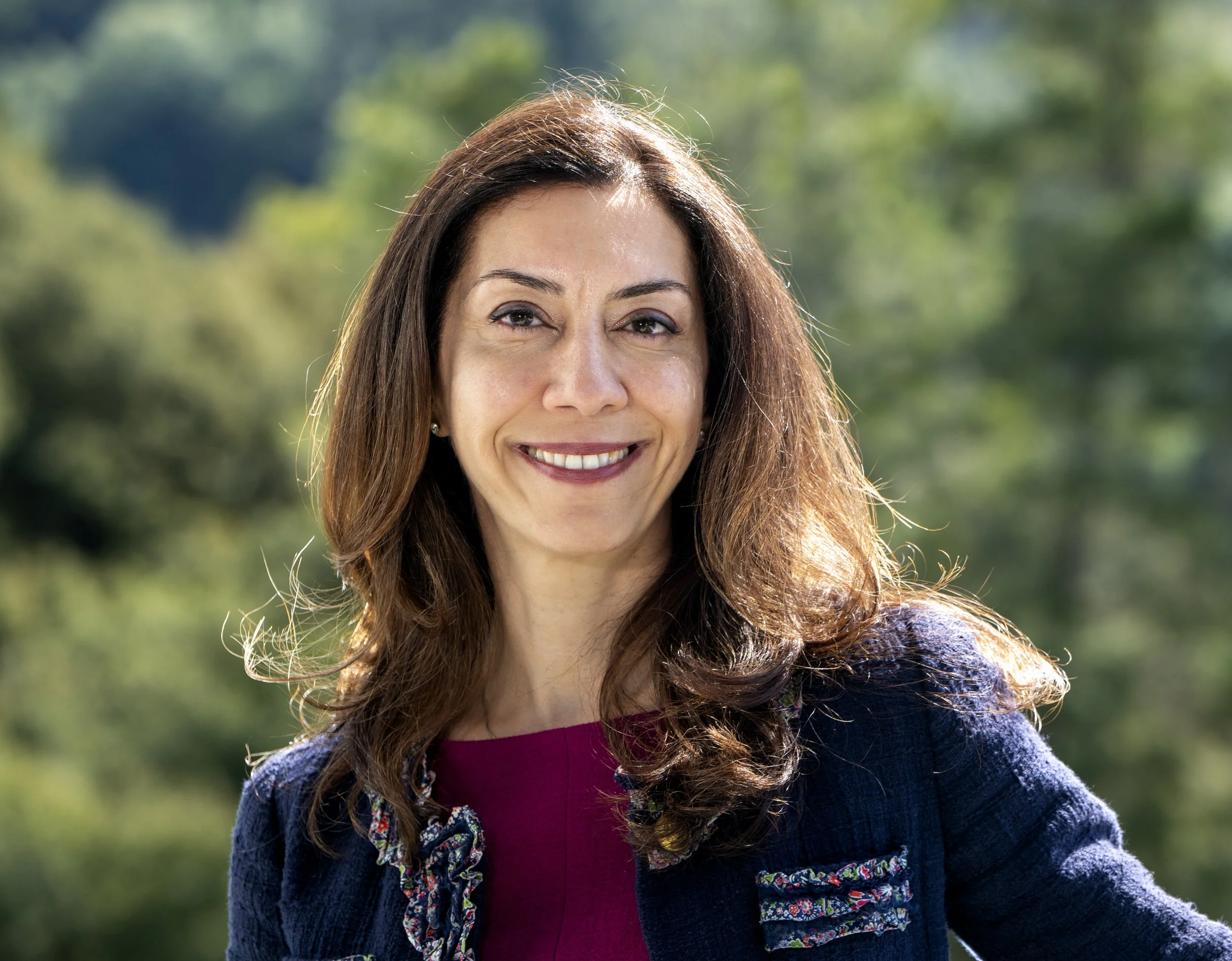
Dr. Newsha Ajami
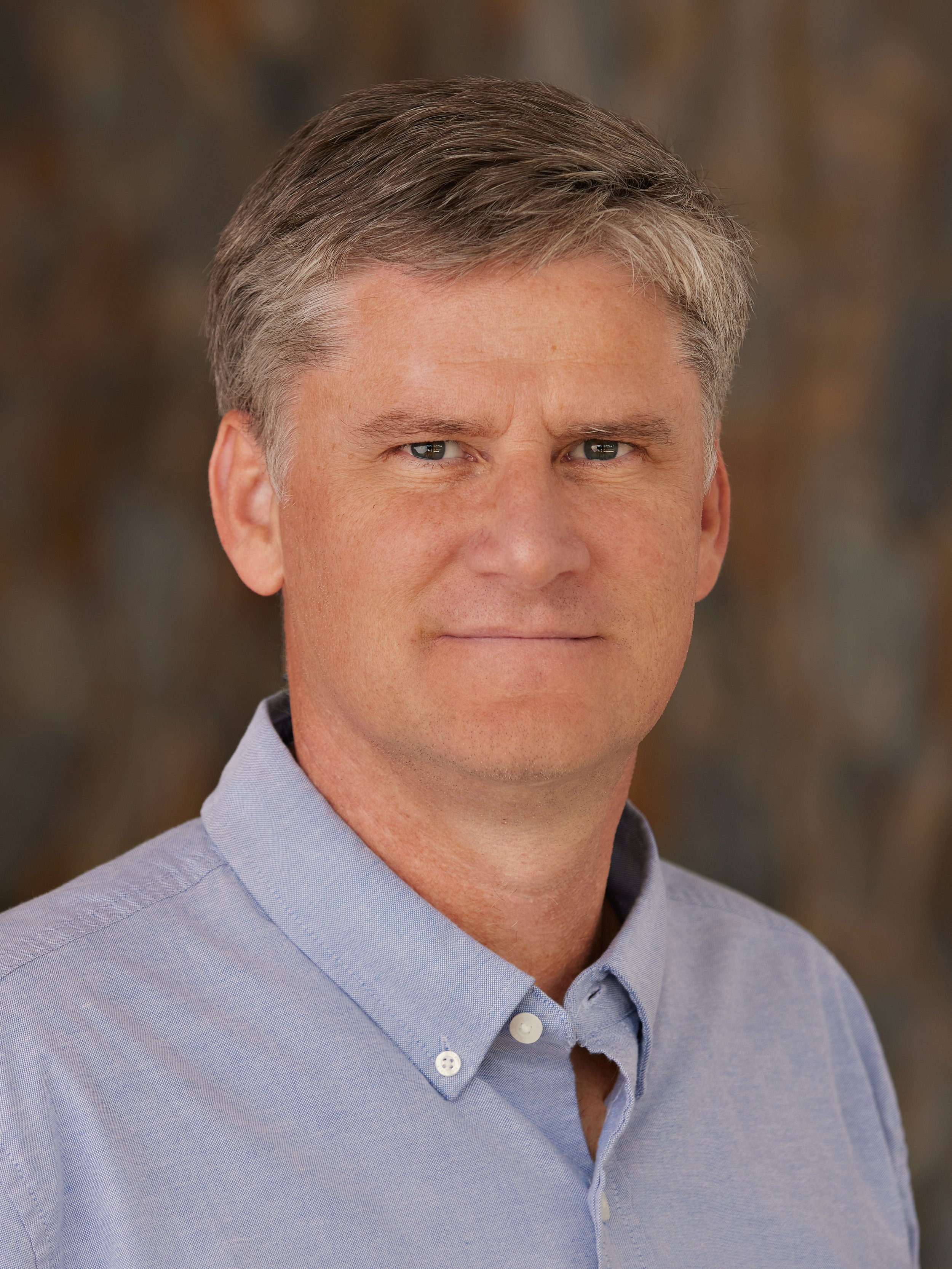
Dr. Martin Doyle
Listen
In the second half of John Sabo’s conversation with Dr. Newsha Ajami and Dr. Martin Doyle, the discussion shifts from the 1951 national water plan to what a modern national water strategy needs to address. Together, they explore the economic value of water, the scale and structure of governance, rural water challenges, and why innovation in governance and finance, and not just technology, is essential for the decades ahead.
“ I think what we want and what we need as a nation is to be aware that in almost every business decision, water is actually an input variable. But we have lived in a world of luxury where they haven’t actually had to consider it as such. ”
Key Topics
Communicating the Value of Water: Martin explains why the water community has struggled to communicate water’s economic value, and why industries must start treating water as a core input to their operations—not an assumed, inexpensive resource.
Why Making Land Use Decisions First is a Problem: Newsha describes how development and permitting often happen long before water planning, leaving water quantity considerations as an afterthought that threatens long-term resilience.
Federal vs. State Roles in Water Governance: John, Newsha, and Martin break down how water authority is fragmented across levels of government, creating tension, duplication, and barriers to holistic strategy.
How Basin and Aquifer Boundaries Shape Water Governance: Martin and Newsha discuss how different hydrologic boundaries—like basins and aquifers—affect what kinds of water management structures can realistically work, using examples from the Colorado River and the Lower Mekong.
Why Rural Water Belongs in a National Strategy: Martin explains that most water supply, groundwater recharge, food production, carbon sequestration, and species conservation depend on rural landscapes, and Newsha adds that many rural and tribal communities have historically been excluded from water rights, planning, and major investments.
Innovation, Not Technology: Newsha and Martin explain why the strategy avoids listing technologies and instead focuses on creating the regulatory, financial, and institutional space needed for new ideas to be tested and adopted.
Links to Relevant Studies and Resources:
Learn more about the Aspen National Water Strategy Initiative, where participants are developing a national water strategy.
Learn more about the Lower Mekong Commission, which John references when discussing binational vs. multinational water governance.
“ The challenges and opportunities these rural communities are facing are very, very different, and if you try to use the same tool to fix the problems or challenges they’re facing, it’s in vain. It’s not going to get anywhere. ”
Transcript
START (AUDACIOUS WATER EPISODE 2 SEASON 5)
JOHN SABO: Welcome to Audacious Water, the podcast at the center of water and climate adaptation. I'm John Sabo, director of the ByWater Institute at Tulane University. In episode one I spoke with Dr. Newsha Ajami, Chief Development Officer for Research at Lawrence Berkeley National Lab, and Dr. Martin Doyle, professor of River Systems Science and Policy at Duke University. We talked about the first national water strategy written back in 1951, why it was created, what it accomplished, and how it still shapes U.S. water management today. If you haven't listened to that episode, I suggest you start with that one. In this second half of our conversation we turn to what a modern strategy should include, with a focus on governance, economics, rural water, and innovation. We also talk about how it could help bring together a fragmented system to meet the water challenges ahead.
JOHN SABO: Let's transition to the insipient strategy now. And I've got a couple of questions there, but I just - you know, I'm loving this conversation; I want it to continue to go this way. So if some of these questions seem obtuse you can take them a different direction. But I want to sort of try to cover a couple of the key areas of the insipient strategy, because, you know, the topics are different today. And so, you know, one of them I think we can kind of springboard off of the last piece, where, you know, we can't make this connection between land stewardship and water stewardship. I like that a lot. And I think some of the issue is, is education, communication, marketing, whatever you want to call it, how do we - so the question is, how do we align the water community on a messaging that makes water a national priority?
DR. NEWSHA AJAMI: Can I sort of maybe reword that a little bit, John?
JOHN SABO: Please, yeah.
DR. NEWSHA AJAMI: And I think - I would say the challenge we are facing there is land-use management is very much of an economic driver for a lot of states, right? And they use that as a way to deal with development, you know, bringing economic prosperity, or tax dollars, or however you want to think about it. And those are very different entities, as Martin also touched on. And they go first, right? We set policies on how we, you know, develop our land at a state level or local level. We give permits to people to build stuff or do things. And then the secondary part of that is, oh, by the way, go figure out if there is any water; or, oh yeah, go get a permit for this, you know, from the water board or something to make sure you don't pollute the land. But a lot of those come secondary. And on the pollution side we have sort of been able to manage this a little better, partly because of the Clean Water Act and the way that sort of plays out in different states. But on the quantity side we have really had a problem, because that secondary piece that people go on by the water plan and come get a sort of like a stamp on that water plan, is very much of getting a stamp rather than really meaningfully thinking about how does this fit into the short-term and long-term water sustainability of the state or the region?
JOHN SABO: Yeah, I like that. And that's a link I think, you know, in our recent meeting that I only put together. So, like, you know, and I'm in the water space, but making the link of, oh, well, economies are driven by taxes, property taxes, and development of land. And without foresight about the consequences of that for water for downstream users or other users of an aquafer or whatnot, I think is definitely a piece that we have to bridge in a new strategy. It kind of relates to sort of area 1 of the impending strategy, which is economics. How do we communicate the economic value of water, it sounds like is a key issue, right? Because land is valued higher, right? How do we do that? What are the key steps there?
DR. MARTIN DOYLE: Well, I think that, you know, how do we communicate the value of water has just been this perpetual failing of the water community. And we - you know, by constantly saying water is life, or water undermines everything, we diffuse the message. So I think that one of the big consistent themes that we heard very early on in developing this strategy is water and the nation's economy. And, you know, it almost gets back to the whole Clinton era thing of "It's the economy, stupid." And so I think that that resonated with people of, yes, water's important for ecosystems. Yes, water's important for this thing. But in the end, you know, no water, no economy. So underneath that are a whole lot of other things, but I think one of the big messages that we heard is, we need to make people in other sectors, we need to make them aware and have them appreciate the economic value of water in their particular sector--from data centers, to chip-manufacturing, all the way to moving grain out of the Midwest and through your town in New Orleans. So we need to quantify that. We need hard numbers on that. And then we just need to be able to communicate that with a singular purpose in a way that the community has to date just not been able to stick to.
DR. NEWSHA AJAMI: And I'll add to that. You know, if you look at investments and water innovation over the years, the biggest category that has received investment is treatments. And much of that has been driven by food and beverage companies, partly because water is a very important ingredient in what they produce, and they have been investing in treatment because they need to have highest-quality water they can access for whatever they produce. And that means that they need to have better membranes, better treatment. And that's where sort of that group, that subcategory of economy, has realized the value of water as a very important ingredient into what they built. I do not think many of the other sectors have realized that, partly because water is cheap, people don't know where it's coming from, they somehow access it in some way, and they don't think about it really. It is integral to their operations, but they don't think about it that way, partly because it has been easy to access. So trying to kind of, you know, put some numbers on that is super important. Being able to help people understand, look, you could not have built this facility if you didn't have water. You could not have built this, you know... I think data center is a - or chip-manufacturer is a newer or emerging industry. But you can go back to every industry that they depend on, and all of it--from power, to transportation, to clothing, to, you know, steel manufac- like, manufacturing--all those industries depend on water. But I don't think they necessarily think about water, per se, as an input to their system. Their outputs, however, interestingly enough, is quite managed, because they have to get a permit if they are using water and they have to discharge it. But an input to their system is not managed, and efficiency is not necessarily valued in their system.
JOHN SABO: It's so interesting. Because, you know, like, my mind is going towards, well, if they tax property why can't there be some surtax for water that's used, you know, and things like that. But I think there are other more innovative answers than that. And, you know, it strikes me, too, that basically what you're saying is that we haven't done rudimentary economics. Because this is - you know, like, I know that this kind of report has been produced for the Colorado River, right? Like, I know some economic shops in Arizona that do it every five years, right? This is the cost of drought. But what you're saying is nationally we haven't done that. Like, there might be some bright spots like the Colorado River where people understand the economic importance of it. Maybe we're not acting on it as much as we should there. I'll speak as an Arizona citizen there. But in other places it just hasn't been done, right? That's basically what you're saying, and we need to do more of that, that basic rudimentary economic analysis.
DR. NEWSHA AJAMI: And does it need to always focus on droughts? I think that's another question, right?
JOHN SABO: Right.
DR. NEWSHA AJAMI: So, like, it should not be drought-driven. It should be actually in every given year, even if you have plenty of water, you should think about the value of this resource that you're using in some way.
DR. MARTIN DOYLE: Yeah, I think that the pivot that needs to happen in the water sector is to demonstrate the value of not having to think about water. So technology firms will move into Newsha's backyard, or my backyard, because they are completely aware that the talent pool for technology - young technology people, they know that the labor pool is there. So they don't have to think about, you know, talent by moving into the Bay Area or into the research triangle area. But they know that if they move into certain other geographies they have to think about, all right, is the tech labor actually available for this? It gives them pause. And I think Newsha's turn on this of water as an input variable, I think what we want, and what we need as a nation, is to be aware that in almost every business decision water is actually an input variable, but we have lived in a world of luxury where they haven't actually had to consider it as such. And I think what we as a sector need to do is say, okay, that new fiberoptic manufacturing facility in Corning, New York, turns out you can do that because you've got really stable water in that area of New York. And actually drawing on the (inaudible) diagram of a particular new facility or a new hiring plan, water is there. The utility is fiscally viable there. Everything that you need with respect to water is there or is not there, and you need to invest in it as such. But just having it as part of the calculus, yeah, I agree with you John--we need to do the hard economic analysis to show how, where, and when it is or is not a limiting factor.
JOHN SABO: Interesting. And just to reinforce Newsha's point, on the low side on the high side, right, it's disasters and other than just drought. And there are many of them, right? Okay, so let's turn our sight to governance - water governance. Because I think there is a piece of governance in the economics. I mean, I just brought up the tax wor- you know, the T-word "taxes;" that's part of it. But there are a couple things that I want to focus on. One is I feel like in the first water strategy, and in our discussions for developing the second water strategy, we've talked a lot about federal vs. state responsibilities. I think it's the key issue. There's a second key issue, which I think we haven't talked a lot about, and I'm going to give you an example of where it comes from. In my state we had some of the largest restoration projects planned, sediment-diversion projects, that would've built lots of coastal land. And they were upended, some would say, by politics. And they were upended because the process - the science process wasn't as transparent as it could've been, and the community engagement wasn't as good as it could've been. And this points to me not that the science process is wrong, but more that we still haven't really figured out how to bridge this nimbyism community perspective with greater good served by state or federal government. You know, so two pieces that I'd love to hear your perspectives on, one is federal-state--because there is a gap there, too, right--and then even within the states there's this gap between state, what the state does in a current administration, and what happens in my backyard--"I don't want it in my backyard," right? And you have those in California and in North Carolina, I'm sure, too. So thoughts on those two topics. I think they're fundamental for understanding governance.
DR. NEWSHA AJAMI: I'll say something quickly on this, and I think just maybe taking us back a little bit to reflect on where we are right now, and why we are dealing with some of this. You know, if you think about governance, whatever we have right now is, you know, governance is sort of the embodiment of institutions, the policies, laws, regulations, like, you know, the data-streams, or everything - and the people that enable the, you know, how we deal with water. And if you think about it, going back to the, you know, the 1950s document, we have set up institutions around some of the infrastructure that we have, the way we taught about water, the way we divided water. And those institutions were set to deal with the challenges of the time, right? These people were set up to deal with those challenges, and their guidebook, or the guidelines that they deal with, is still from that time. They have evolved, but still, like, fundamentally the same thing. And I think that creates this challenge when you're thinking about how to deal with the problems you're facing today, beyond the fact that people are not included in some of those conversations, beyond the fact that some of these governance structures never included certain communities as part of the decision-making. Or they never accounted for the rights and well-being of some groups of the society, and also sometimes the ecosystem, yeah? It wasn't part of some of the decision-makings we (inaudible). That creates this conflict that we are dealing with it right now, and some of that is being used to fight what needs to happen right now, through lawsuits, through uprisings, through engagement with the public policy process or, you know, permitting process. So some of that nimbyism that you see is cultural. You know, in California we see that we are fighting over a lot of different things. You know, cities vs. fish, cities vs. ag, you know, fish vs. them. Like, just all sort of fights. And then some of it is, like, where do you want to go next? And people don't want it next door, they don't want, for example, a desalination plant in their neighborhood. So they want to push it down to a neighborhood that is, you know, might not be as valuable real estate. And those people are going to get impacted, so they are fighting. So it's, like, sort of the combination of old rules, old systems, old institutions that has never evolved properly, and the fact that many of the people that - and the environment were not part of the decision-making process, and they want to create space for themselves in this process. And then also lawsuits and fights over what is right, what's wrong. And we just can go on and on and on, in California at least, fighting and filing lawsuits, and fighting again, and throwing good money at something that doesn't really have a good outcome, because that money can be spent in a better way.
JOHN SABO: I mean, it needs to be said that California has done some revolutionary things. I'd like to say that California led the United States on mitigation, and Texas is leading the United States on adaptation, even though they won't say it with that word.
DR. NEWSHA AJAMI: Hundred percent.
DR. MARTIN DOYLE: You mean climate - you mean climate mitigation and climate adap...?
JOHN SABO: Yes - yep.
DR. NEWSHA AJAMI: I mean, okay, so this is not black-and-white, obviously. Like, and I didn't mean it that way. But, you know, it is important to also pay attention what we are spending our money on and how we are fighting these fights.
JOHN SABO: No, I agree. No, great point. Yeah. Martin, any thoughts about federalism? Like you said was it an important piece of the first strategy and...?
DR. MARTIN DOYLE: Yeah, does Martin Doyle have an opinion about federalism?
JOHN SABO: [LAUGHTER] No, I don't want your opinion. I just think it's - you know, like, it's an issue that...
DR. MARTIN DOYLE: Well, I think it's the issue. I mean, I think that this is probably the thing that was palpable in the room when we were talking through the governance sections was the very staunch positions of different people in the room about where decision-making authority should reside.
JOHN SABO: And funding, right?
DR. MARTIN DOYLE: Yeah, I mean - well, of everything. No, decision-making. I mean, funding - look, let's be transparent on funding. The state and federal governments are responsible for more than 85% of total government spending on water infrastructure. The federal government makes up, you know, about 15% at most of total government spending on water infrastructure. So from a pure funding standpoint for big outlays of capital, that resides at the state and local government level. So they will always have say in whether or not that money actually gets spent, the big (inaudible) of money. In terms of the decision-making, I think that that's kind of the thing that we have been trying to figure out is what would a watershed basin, regional type, or aquafer-based authority look like? What could that look like? Or what some of the finance people were interested in is what would a pooled bond fund look like, where you're enabling multiple entities within a particular hydrologic area to issue debt that is serviced by entities or populations within that particular hydrologic unit? I think that playing around with the geography of water management is really where the governance action is at. So what types of decisions have to be made at the state level, what types of decisions should be made - or could be made at the federal level, and then how can we start to just innovate on governance? And I think that that's where certainly I was the most excited was the governance innovation stuff. And I think because if we can innovate on the scale of governance it opens up a lot more opportunities on all of the other strategy topics.
JOHN SABO: Up next, Newsha and Martin explain why rural communities must be a part of any national water plan, and how innovation in governance and finance could unlock solutions across the country.
JOHN SABO: Let's noodle on that a little bit. You know, I think it's hard, right, because, you know, I'm in New Orleans. I'm at the bottom of the Mississippi. You're not going to have an agency that covers 31 states; it's just impossible. I think even for the riparian states it would be hard, right? So it has to be more local, more regional and less supra-regional, right, if it's going to be successful. What do you think, like - I don't need, like, a HUC 8 or HUC 6 answer for this, but, you know, like, what's a viable boundary for that working?
DR. MARTIN DOYLE: I don't know. I'd be curious - I mean, you know, the 308 studies I think tried to thread this needle. It'd be kind of interesting to go back and look at those. So I've got a good sense on the eastern and especially on the southern United States and how that works. But, you know, I'd be curious - you know, Newsha's thought a lot about aquafer governance, and so I'd be kind of curious, is there an appropriate skill for aquafer governance? I think that's actually a magical question for the sector to deal with.
DR. NEWSHA AJAMI: I mean, aquafers also come (in different sizes), right? You have Ogallala that's, like, massive. And then have some of the groundwater basins in California that are a little bit more manageable. And I think they sort of fall within the same state, so it's easier to kind of deal with that versus Ogallala that's, like, across different states and different entities. I think I would say, John, the way I think about it generally is it's like pieces of puzzle or, you know, or (inaudible) building a house, right? You have to start from a sort of (block) and then build it up. And if you start from the sub-basins and then build up those governance as you go up, sometimes there is a process to which you can have bottom-up/top-down coordination. You're absolutely right that you cannot get 31 states to coordinate and collaborate. But if you actually have these building blocks, then all of a sudden you reduce the scale when it comes to engagement and coordination. But then within those - each one of those blocks then you can work together. It's not about how HUC 1, or HUC 8, or HUC 12; it's more around, like, how do you define those boundaries? But it has to be within a watershed so they all can sort of feed into each other. You know, in my earlier part of my career--not that you're interested in that part--but I used to build (distributed) hydrologic models. And this conversation was very much sort of central to that, like, "How small - you know, what size is the right size when you're building these distributed models?" And people would focus on grid vs. you know, sub-watersheds. And at the end of the day when you build these models you see the benefits of going super small is very, very minimal, but there is a very optimal size to which you actually can have a watershed-level perspective, but also can provide a lot of input from these small sub-watersheds that informs the - you know, how hydrology functions and how physics works. So that's how I think about it. I think both groundwater or surface water doesn't matter--both of them needs to be sort of that building-block style.
JOHN SABO: That's interesting. A couple just observations--and this just may be the way I think, which sometimes is non-linear--but I've done a lot of work in the Mekong Basin in Asia; it's not in the United States. And the lower Mekong has four countries--coordinating those four countries is nearly impossible. Coordinating two of them though is a lot easier. The bi-national agreements are a lot easier to make happen than I think the multi-national. And that same kind of logic may apply in a basin like the Mississippi where you've got 31 and, you know, neighboring states can work together probably more easily than Iowa's going to work with Louisiana, right?
DR. NEWSHA AJAMI: Yeah.
JOHN SABO: Even though that needs to happen, too.
DR. MARTIN DOYLE: And John, just on that, I think that, you know, there's historical precedence for that, too, in the U.S. You know, they couldn't crack the code on the Colorado Basin in 1922 until they cracked it into the upper basin and lower basin. And then once they had that governance structure set up, then the lower basin/upper basins were able to then start subdividing it. You know, whether or not that's a good thing a century later is a different question, but in making these types of water-governance decisions I really agree that sometimes you just have to start lumping differently, to Newsha's point of "smaller is not always better," that there is this scale at which you can start to get almost transactional. And 31 can't be transactional, but two or three you probably can. You can negotiate and find solutions at that number of players.
JOHN SABO: "Number" is a good word for it.
DR. NEWSHA AJAMI: I think Colorado is a great example, Martin; thanks for bringing that up. Because I think the challenge Colorado is facing right now is not how it's divided as much as it's how the water was allocated, right? So if they had - you know, I always talk about, like, if you had a proportional division of water versus this very specific number allocation, we might not have had this problem we are facing right now, right? Because you still could've coordinated the way it is, it just would be, like, the pie is this big so you divide it this way. It's always this percentage that goes to, you know, this state versus that state, rather than this amount. And so I think there are a lot of different pieces and levers that needs to be, you know, moved and pushed to make these things work. And if the fundamentals are right it will work. If the fundamentals are a little bit flawed, which you see in the Colorado River, than you're going to have problems. So that's why governance is very much important, because it's just like there's so many different parameters that goes into setting up these institutions and the way we allocate water, and the way we manage it among ourselves. And, you know, if you have one piece that really is standing on a very shaky ground, eventually it will come back and cause problems.
JOHN SABO: Super interesting. I like this. I also just want to highlight Martin's point early on about--I can't remember the name that you used for it, Martin, but it was, like, "bond authorities" I think--the notion of creating new opportunities rather than new management structures that tell you what to do, is probably the way forward, right? And maybe opportunity rather than regulation in the context of two or three actors is a good way to summarize what we've talked about. And I like that. I mean, three, like, is an elevator speech, right? Like, you can't remember more than three things in an elevator speech, right? And so it makes sense that three actors is kind of the upper limit in terms of negotiating. When I think, again, when there are new capital outlay opportunities that even makes it more interesting.
DR. NEWSHA AJAMI: People work together when there's money; it forces them to work together.
JOHN SABO: All right, we're going to move on to I think a topic - I know that this was - it was very critical to get this in this water strategy, the second one. But tell me why it's so important to get rural water right.
DR. MARTIN DOYLE: Ah, frickin' rural water. Well, I think one of the reasons why I kept beating this drum--which Newsha may say is actually a dead horse--but the reason why I beat this drum was, when I looked back over the past decade of water strategy or water vision documents that have come out, let's say over the past 10 to 15 years, outside of things specific to a basin--so outside of things like the Colorado Basin types of stuff, or Mississippi Basin--they've predominantly focused on issues related to urban water infrastructure, especially municipal infrastructure. And I think that that's unbelievably important and profound because, you know, in my early days of my career, grade school and stuff like that, nobody talked about water utilities. It was like the backwater of water sector. And then water utilities over the past decade or so have gotten an enormous amount of attention, which is super important and they needed to get. But I think in the process what has happened is that rural landscapes have been, to a certain degree, left behind not from a scientific sense, but from more of a governance sense. And, you know, I come back to our water predominantly comes from rural landscapes, our groundwater comes from rural landscapes. Carbon - if we are going to have carbon sequestration at scale, it's going to happen on rural landscapes. And if we have species conservation, that's going to happen on rural landscapes as well. So I think that calling out water in rural communities was something, that signaling that some recognition of those communities, but also signaling that I think we're going to have to go into a decade of how do rural landscapes and rural communities benefit from the enormous amount of capital that's flowing around the infrastructure space in general? And, you know, the last thing is--and I know this isn't a political podcast, or I hope it's not, John--but...
JOHN SABO: Nope.
DR. MARTIN DOYLE: ...you know, the divide between rural and urban America is just stark. I mean, it's just - you know, there is no more purple; there's just red and blue. And vast swaths of the landscape are red, and high-density population concentrations are blue. And I think any way that - any topic that allows us to start bridging those two communities is a topic worth centering more. And if water can help us get some rural people into urban conversations and vice versa, then I just think it's worth raising that up for that reason alone.
JOHN SABO: Amen. Maybe it's a religious podcast.
DR. NEWSHA AJAMI: Yeah [LAUGHTER]. Maybe I'll add to that a little bit. We have had a lot of conversation on this section, on this pillar actually, trying to figure out is it important to have it stand alone, or should we kind of incorporate it into other sections? But I think one of the most important things, at least from my point of view, is the challenges and opportunities these areas, these rural communities are facing, are very, very different.
DR. MARTIN DOYLE: Yep, for sure.
DR. NEWSHA AJAMI: And if you try to kind of use the same tool to fix the problems or challenges they're facing, it's like - it's in vain. It's not going to get anywhere, right? So being able to have that conversation is super important. You know, coming into - like, what kind of infrastructure do they need? What kind of governance structure do they need? How do they - how money flows. How do they engage in the process? All of that is so different. And being able to kind of lay that out is very important. Another thing I'd add to what Martin said, a lot of our food comes from rural communities, and we all depend on that. And often, you know, being someone who has been born, raised, lived in urban areas all my life, often you hear how disconnected urban areas are from these rural communities. And, you know, they - or ag, or, you know, anything that has to do with rural people cannot even imagine what's the value of that to them. But the reality is, we are all very much interconnected, and we have to be able to have that conversation. And we have to empower these communities. Again, what tools goes there, what solutions show up there, how do you make sure... For example, going back, some of the tribal lands had been the ones that have been left behind. They are not part of the conversation--you brought his up, John, earlier about fighting over, you know, who gets what, where, who. A lot of these tribes have never been at the table. They never had the water rights allocated to them. They have never been able to engage in the conversations that are happening that is very much related to them. So I think that's one of the reasons we kept it as it is. And as Martin said, as we are thinking more and more about preserving nature, like, making sure we worked with nature rather than building, you know, massive infrastructure in places that we should not be building, if we don't have these conversations those decisions are not going to be made properly. So it's important to have this section.
JOHN SABO: I think that's a great overview. Yeah, I mean, the trailer for this season covers the red-and-blue piece that Martin brought up. And I think it's spot-on. And also the background of, you know, municipal infrastructure used to be the backwaters, but then it became the popular topic. And I think it's because of innovation, right, that it became the popular topic. And now we need to think about the context of rural communities and how we get rural communities on board with water innovation I think is a big place that's wide open for discovery and exploration. And I want to, like, turn now to last question of the interview, which is going to be on innovation. And I'm just going to tell you that in our discussions... So I have two private-sector companies. One is energy-recovery from wastewater treatment, and there's a lot of innovation there. But I know that that was - you know, energy was not what we were covering; we were covering water. So I kept my mouth shut about it. But I do want to say that I was really surprised not to have discussions about widgets that make decel more effective, or, you know, these sorts of things, right, or that detect non-revenue water in cities, or, you know, that kind of, like, technological innovation that rankly is a whole different genre of water research, right? Talk to us about what you see is innovation, why we didn't cover that stuff, and why we covered other things in that topic.
DR. NEWSHA AJAMI: So okay, let's go back to the 1950 document for a second. The reason is, if you think about that document, it wasn't (inaudible) about the widgets or things that - yes, they do talk about infrastructure. But it's about enabling uptake or building of infrastructure, right? Our goal wasn't to promote one solution versus another. You know, non-revenue water is an important issue today; it has been an important issue for a while. But the reality is there's so many tools out there, and I can envision in the next 50 years the tools that will be on the table for people to pick up and incorporate would be very, very different from what we are imagining right now, right? And if we want this document to last that long, we should not be putting widgets in there, right? We should actually talk about--again, going back to my earlier comment--what's the guideline, what's the skeletal that we need to be able to enable us to move the water sector forward at any given time, and giving it enough flexibility and enough ideas, or framework, or - to create space for new ideas to come in, to make sure the research and development is funded, and we (are keep) building ideas and bringing them to scale? But also we have proper financing that would help these tools to be implemented, flexible regulations that would help us to test some of these ideas and create space for them. You know, having institutions that can actually envision themselves to be in the middle of all this. And, you know, dealing - you brought up water and energy. One of the reasons that's a challenging issue is because people who deal with water, and people who deal with energy are two different groups, and, you know, the way they managing everything is different. Yes, if you generate electricity within your wastewater treatment plant you can use it internally, you can potentially add it to the grid, but that's very much of a process, right? So not to distract from the original comment (inaudible) make a point is we wanted to bring that skeletal, that guideline and point, and sort of guardrails that help us to move forward. Now, (how we) moved forward and what comes in along the way is something that we shall see how it evolves. But that was the not the goal of this document.
JOHN SABO: I like that a lot. It seems like the enabling environment requires innovation, social innovation, which would be the governance piece, and finance innovation possibly, which would be access to capital to get things moving. Does that sound about right or am I missing a piece there?
DR. MARTIN DOYLE: No, I just want to pick up one quick thing to really highlight what Newsha said: "create the space for new ideas." And what I see is - and to be clear, Newsha will definitely back me on this, I am not an innovation guy. [LAUGHTER] So I think what I heard consistently early on was there is a lot of innovation out there, there's a lot of water technology out there, and what we are really limited by is the adoption of it. And so what Newsha I think has been just doggedly trying to get people aware of is that innovation is not about the widgets, the bits, and bops; the innovation is about how do you create the social space, the financial space, and to be honest, like, the regulatory space for these companies that are developing things, to be legally able to try it? I mean, we've created a water-governance system that is very adept at saying no, and very recalcitrant about, you know, they just really do not want to say yes to innovative types of approaches to traditional problems. And that's the space that needs the innovation is - the innovation of adoption is I think what we really need.
JOHN SABO: Super cool.
DR. NEWSHA AJAMI: And I would say--it's a joke, but I'll say it anyway--Martin and I had to negotiate. He got to keep the rules section and I would have the innovation section.
[LAUGHTER]
DR. MARTIN DOYLE: Exactly. It was the great federalism tradeoff that we had.
DR. NEWSHA AJAMI: Yes, we had to fight. We had a, you know, arm race. Eventually we both won.
JOHN SABO: Yep. Very cool. Well, this has been a great conversation. I really appreciate the time that you spent with us and the listeners, and super excited to follow up on specific topics. Like we skipped over disasters and innovation in infrastructure, but we'll have plenty of time to interview others on those topics. Again, appreciate your time, and thanks for being on the show.
DR. NEWSHA AJAMI: Thanks for having us.
DR. MARTIN DOYLE: Thanks, guys.
[MUSIC]
JOHN SABO: Okay, that's a wrap. What a great set of new ideas to chew on. A couple of editorial notes to connect this first set of interviews with Martin and Newsha to the rest of the season. The forthcoming second national strategy has six pillars or focus areas. In my interview with Martin and Newsha we covered four of these--the economic value of water, water governance, rural water in communities, and innovation. In the next set of interviews we will dive into innovation in episode three, and the two remaining focus areas in episode four. Those are natural disasters and infrastructure. I will spend several interviews on these two topics and make some connections between water, climate adaptation, disasters, and infrastructure. A couple of closing thoughts for this intro with Newsha and Martin. First, this new document, the second national water strategy, is really a culmination of work that Martin and Newsha have been doing for over 10 years through annual dialogues and roundtables about water at the Aspen Institute. One of the things I've enjoyed the most about these dialogues is the breadth of expertise that Martin and Newsha assemble for these conversations. You will see some of this breadth and depth in forthcoming episodes of this season of Audacious Water. One of the bright spots of the strategy effort and the Aspen Institute water meetings, is that water is a topic that very easily crosses the aisle. It is important to Dem and Republican administrations in red and blue states, and to the public and private sector. This observation by itself is not enough to make our national water strategy deliver better outcomes. There are real hard choices in front of us--most of them have to do with who is in charge and who pays for upgrading and improving the performance of infrastructure. This infrastructure is not just concrete, and I will work on this idea through the season to come. This infrastructure is social, it is cyber, and it is an evolving portfolio of built and natural assets that protect us from a changing climate without breaking the bank. More on this in this season of Audacious Water.
JOHN SABO: That's it for this episode of Audacious Water. If you liked this show please rate and review us, and tell your colleagues and friends. For more information about Audacious Water, and to find in-depth show notes from this episode, visit out website at AudaciousWater.org. Until next time, I’m John Sabo.
[0:40:59]
END (AUDACIOUS WATER EPISODE 2 SEASON 5)