Rethinking Insurance in an Era of Extreme Weather with Raghuveer Vinukollu
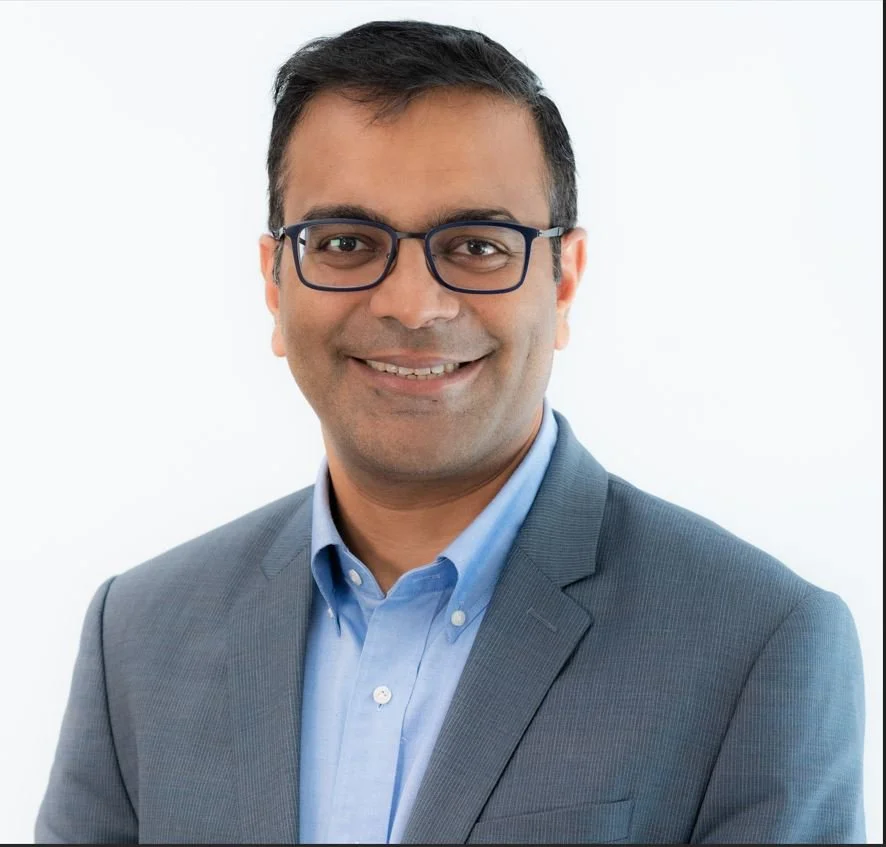
Raghuveer Vinukollu, hydrologist and reinsurance professional
Listen
How do you insure a future where extreme weather is the new normal?
Raghuveer Vinukollu, a hydrologist and reinsurance professional, joins John to explore how the insurance industry is responding to the growing risks of extreme weather. Reinsurance is insurance for insurance companies, and it helps make it possible to cover catastrophic events like hurricanes and flooding. Raghuveer explains how data is used to understand and price risk, why the industry balances accuracy with adequacy, and how natural infrastructure and system-scale thinking could help reduce risk and lower insurance costs.
“There is always going to be a certain amount of uncertainty which can be priced for, but if we can get the right amount of adequacy, then only we can move forward.”
Key Topics
Accuracy, Adequacy, and Uncertainty in Reinsurance: How insurers make decisions under uncertainty and why they can’t wait for perfect data.
How Reinsurance Works: A Probabilistic Approach to Risk: How data and probabilistic modeling are used to understand and price disaster risk.
Extreme Weather and the Changing Risk Landscape: Why disasters are becoming more frequent and why failing to acknowledge climate change leads to a constant catch-up cycle.
From Risk Assessment to Risk Reduction: Why mitigation must come before insurance can be effective.
Nature-Based Infrastructure and System-Scale Solutions: How combining projects across a watershed can reduce systemic risk and lower insurance costs.
Financing Resilience and the Future of Adaptation: How new financial tools could fund resilience, and how better data could help communities access those solutions.
Links to Relevant Studies and Resources:
Learn more about Raghuveer Vinukollu and his work
Raghuveer discusses work with The Nature Conservancy and the U.S. Army Corps of Engineers on levee setbacks and flood risk reduction
Learn more about reinsurance and how it helps manage catastrophic risk
Further reading
Explore NOAA’s Billion-Dollar Weather and Climate Disasters Database to understand the rising cost of extreme weather events
Learn more about severe convective storms and their growing impact on insured losses
“What I’ve learned over time is this industry is always ahead of the curve, in terms of saying we are almost like a sonar scanner into the future.”
Transcript
START (AUDACIOUS WATER EPISODE 6, SEASON 5 WITH RAGHUVEER VINUKOLLU)
JOHN: On today's show, how the insurance industry is responding to the growing risks of extreme weather. My guest is Raghuveer Vinukollu, a hydrologist and reinsurance professional. Reinsurance is essentially insurance for insurance companies. It's how insurance companies can afford to cover very risky scenarios or catastrophic events like hurricanes and flooding.
Raghuveer combines a background in hydrology with more than a decade in the reinsurance industry where he works at the intersection of climate science, data analysis, and risk management. He also contributed to discussions around the national water strategy, helping us refine how we think about proactive disaster management in a systems framework.
If Raghuveer has a superpower, it's this systems approach.
Raghuveer, welcome to the show.
RAGHUVEER: Thanks, John.
JOHN: So let's start with some real basic stuff. Tell me what you do for a living.
RAGHUVEER: John, thanks again for inviting me to this. I'm really looking forward to the discussion. So what I do on a daytime basis is a reinsurance professional. I work for a global reinsurer. But for this discussion and conversation I'll be representing myself.
Background wise, I'm also a hydrologist and the combination of the reinsurance industry and the hydrologist academic training is what I brought to the table for the National Water Strategy.
JOHN: Excellent. Let's talk about impact, in and outside of academia and how you view that since you have experience from your PhD inside academia and I think you're also an adjunct professor, and then your job.
How does the impact compare?
RAGHUVEER: I'm a research affiliate at Lawrence Berkeley National Lab. In terms of the impact, one of the reasons why I came into the industry was how do we use this science, and the training and the immense amount of data and information into more of an applied science and make a difference?
That's what excited me when I first got my offer at the reinsurance company. And over these last 15 years in the industry, what I have noticed is the kind of balance that I have to bring in between what I say is accuracy versus adequacy. And it's been a constant juggle because yes, it's really important to have a level of accuracy.
But from the insurance industry perspective, there's always going to be a certain amount of uncertainty which can be priced for, but if we can get the right amount of adequacy, then only we can move forward. So that's been my biggest learning and I would say something that I constantly work on.
And being in the industry, I still collaborate with multiple universities, and in the backyard of our firm is Princeton University and other universities across the US as well. We're constantly trying to see how some of the analytics, some of the science, especially when it comes to flooding and disasters and severe convective storms, how can that be leveraged in the industry?
But then it always, again, goes back to that balance. Why do I need to know that level of accuracy and can we actually get information that can be used in conjunction with some of the insurance data to kind of create a product that can help communities but also whether it's property owners on the residential or the commercial side to kind of recover.
Because ultimately, I would say insurance is a social good product and it's for unforeseen events. Then we are also seeing some of this data from the severe convective storms or the extreme weather actually changing that perspective.
It's no more like if these events are happening almost every year, then where is that unforeseen component? And that's what the interesting part of the discussion with the rest of the people at the National water strategy was really about. How do we bring in the understanding that these impacts are happening significantly frequently?
And how does risk mitigation and risk management, and its role in terms of addressing the insurance availability and affordability?
JOHN: That's great. I want to come back to the comment you made about extremes, but before we go there, tell me the level of granularity that you work at and another way to say it is resolution like in space and time. Are you like in the weeds or at a macro scale, and are you today or are you century scale?
RAGHUVEER: I like to put it this way, that as a reinsurance professional, what I've learned over time is the industry is always ahead of the curve in terms of saying we are almost like a sonar scanner into the future. It's like every bit of information we are getting in terms of the signal is changing.
We really have to be ahead of the game. If we think that the critical infrastructure is going to be an issue in 10 years from now with the changing frequency, we need to know that right now. We can't get caught off guard.
And then same thing, whether it's about technology, some of the self-driving cars, that created a need for a liability issue in terms of these cars on the road. So the insurance industry was always ahead of the curve.
So from your question standpoint, what I would say is we are always wanting more and more data in terms of trying to understand what are the signals that we have to gather in terms of the space and time issue, like again, the aspect is that we want as much data as possible, but to synthesize that information and make it a product, we like to again, come back to that adequacy aspect.
Can we actually get a product out there, which will be accepted by most people and can they understand it? Can the insurance regulators understand it? So a lot of these factors play a role. But behind the scenes we have definitely made sure we have done all the detailed analysis.
And I want to add in one more example: when the whole solar farms and the solar industry, the pv market was starting to grow, there was a need for these major projects to have, when they needed the loans, they needed someone to ensure these panels. And these panels come with some kind of a manufacturer warranty that they will perform over 30 years.
But who's going to take that risk? Will they perform at the same efficiency? And at that point, the insurance industry had to be there. So we had to do all of the analysis in the background to ensure the product, which would then release the bank loans. So, we are always ahead of the curve from that standpoint and always looking for the best data possible.
JOHN: Great answer. I'm going to be a nerd here and I'm going to just ask you a nerdy question. I was just on the phone with USGS before this call, or this interview and talking about how it's been a minute since I programmed.
So tell me, do you have a team that does the science that you use and crunches the data for you? Or do you actually like programming a land surface model?
RAGHUVEER: If you're talking about these teams and a reinsurance company, yes, we do have depth of knowledge in terms of the people that are working around. We deploy a lot of PhDs, whether it's in seismic science, hydrology, or meteorology. So we will put together as much data like analysis as possible.
But ultimately what we do is we take the data available and convert it into a probabilistic science. So we are probably not building a land surface model, but if that is available in terms of the data that's available from that land surface model, can that be used and along with the remote sensing data and along with any of the for example, the USGS data to then create this probabilistic or the stochastic data sets. That's behind the scenes.
JOHN: Got it. Super cool. I want to go back to your comment about extremes, and extremes are on the rise. Talk to me about how you see that. I'm thinking about the NOAA $1 billion disaster website. Tell me your perspective on this.
RAGHUVEER: So, in terms of the extreme weather, the risk landscape, it's definitely changing and I can give you many examples, but let me take a few here. If you talk about the LA wildfires that happened last year, and the insured losses exceeded or almost touched $40 billion.
So one single event, now and severe convector storms. On the other hand, over the last five years, there have been multiple years where the total insured losses have exceeded $50 billion. Now, when you're talking about these $50 billion, that's a number, which in general, if you date back like 10, 20 years back, that would be the insured losses for all perils combined before.
But now these perils, some of the numbers that we are seeing, it's exceeding some really big numbers. Again, $50 billion and so on. The 2017 and 2018 wildfires in California. Those actually, according to an actuarial company called Milliman wiped out the industry profit over a 25 year period in California.
So just those two years of wildfires. And then let's bring it to something for floods. You've mentioned the NOAA data, NOAA billion dollar database. The 2019 floods over the Mississippi, that I think the number is somewhere around $25 billion. The flooding that happened right before the pandemic started.
So you can imagine the impacts of these on these communities that were hit by a pandemic right after the flooding. But the $25 billion, let's just put that in perspective. Out of that $25 billion, only $500 million was insured. So this is over a Mississippi River watershed, which is like the heartland of the United States. The impact that it has from the agricultural export standpoint, the impact it has on the national GDP.
If you're talking about $25 billion in one single event over multiple extended times, I think some regions were underwater for almost 200 days. So these extremes are happening more frequently, and the Mississippi River was flooded back in 2011.
So of course we remember those major events, but then if they're happening twice within a decade, I think the frequency is something that we should closely monitor. So I think the question that poses with these extremes is clearly that are we ready, in terms of the future of these kinds of events?
And the point about climate change or the lack of stationarity is that if we do not acknowledge this problem, then we will always be playing a catchup game. And we talk about the need for infrastructure. We have to start planning this as an adaptive planning process so that we constantly adjust to the changing extreme otherwise we will always be caught off guard.
JOHN: Right. And that brings me back to a point that you made before that I was interested in. You were talking about risk reduction. How do we need to approach that, from the standpoint of adapting to increasing extremes, but also to just insurance prices on the ground?
I live in New Orleans, and here we're always talking about increasing insurance prices. More specifically, how does reinsurance approach risk reduction? Is it investment in new infrastructure and planning that out?
RAGHUVEER: I'll speak in general from an insurance industry perspective, so risk reduction and what role it plays. And I'll start by saying that we call it a risk transfer continuum. And a risk transfer continuum starts with the proper risk assessment first. And once you have the proper risk assessment, then it goes to the risk management, which includes the risk medication aspect of it.
And only when these two are checked off, then we can actually have a sustainable risk transfer and, and that goes into some of the affordability. And availability questions on the insurance side. So why is this important and especially, how do we see this as an industry? So some examples we have seen, for example, the city of Norfolk.
They've been thinking about building, I mean, that's ground zero of the impact on sea level rise, right? The city is actually now building a sea wall or flood wall to protect the city. That's really important in terms of these planning efforts.
So we acknowledge that, but at the same time, we like to bring in the question that, well, if you're going to build a wall and there is a major hydrological event, like a flooding or an extreme precipitation event or a hurricane happening now you're going to get extreme precipitation, which is flooding the city as well.
So what is the impact on the storm water system, that's also a risk mitigating feature. So there are these compounding impacts that need to be looked into. But then we also have to think about more sustainable ways of doing this.
Can we combine nature? We have done some analysis, and multiple companies have done similar ones, like Nature Conservancy taking the lead on the impact of a levee setback over the Missouri River,
Again, it's right after the 2019 floods when a section of the levee broke and the Army Corps was rebuilding it. The Nature Conservancy and the Army Corps worked together to set back this levee. What that did was it actually reduced the failure probability of the levee because of the new way of doing it, and what we could do with that analysis of the Army Corps is to quantify that and the impact on the flood insurance of that region.
We could find that just with that small change, and levee setbacks don't cost that much if you think about the additional cost of that land to be purchased.
But that additional cost, when factored into the benefit cost analysis, we almost found that the insurance prices of about 1500 homes in that region could be reduced by about 55%.
JOHN: Because that parallel from Melissa Roberts episode is, every dollar on the front end reduces the costs on the backend by 13. That's interesting!
JOHN: Coming up, Raghuveer and I talk about why thinking about resilience at a system scale matters and how those projects could help communities reduce disaster risk and insurance costs.
JOHN: I'm glad you brought up levee setbacks because when you were on the panel in the launch of the National Water Strategy, I was listening to one comment that you made in particular because it resonates with my interests in this space.
And you said something about how we need to think about this at a systems level. And think about it as not one project, but a series of projects that, I don't think you said this exact thing, but it was something along these lines, right? We need to think about it as a system of projects that reduces systemic risk.
Talk to me about that. Especially in the Mississippi context.
RAGHUVEER: Right. I'm very much interested in the impact the Mississippi Watershed has on the United States and the communities across. It's not just only those local communities, but it also impacts the global supply chain. So there are implications far beyond just localized regions.
So after this concept of looking into the levee setback and maybe looking at the city of Norfolk, we also looked into certain regions like off the coast of Alabama with the marsh restoration. We started thinking, what if we actually start thinking about this at a systemic scale?
Because when we look into some of these localized benefits, would that actually translate to downstream impacts or even upstream impacts? And if that's the case, then if we are combining multiple projects, shouldn't that actually be much more than accumulative impact on the benefit standpoint?
And so we started looking into thinking that, okay, how about taking a concept like can we restore or build new nature-based infrastructure across the Mississippi River Watershed and quantify the benefits of it? And let's start with only flood risk reduction. I mean, these natural infrastructure have multiple core benefits, whether it's water quality benefits, whether it's from a drought risk reduction, managing the water levels over the Mississippi River, all of these co-benefits can be quantified.
But let's start with only flood risk reduction, and what would the impact be on that 2019 Mississippi River flood on the impact of insurance availability on certain regions and on the impact of certain communities that get flooded so often that an example is the town of Hamburg in Iowa.
It got impacted so many times and some hundreds of residents left their town. So that was also a migration issue, but if what we are trying to quantify is looking at these multiple infrastructure projects from a nature standpoint, how is that being quantified and how is that making an impact on the downstream flooding?
But can we also think a little one step ahead? What's the benefit of agricultural land be? flooding less, right? Doesn't that improve the real estate value of that land? And can we actually quantify those?
And then again, looking at it from an insurance standpoint, the top line, but also the bottom line perspective and how these reduced flood impacts can make a difference in terms of how these flooding events can impact the GDP of the country and the region, especially.
JOHN: That's even a bigger system than I was thinking. I was thinking of just the watershed, but you're connecting it to the global supply chain and commodity exports, which resonates with me, given where I am in New Orleans. Let's talk about the data. Are there enough data to do that thought exercise in a quantitative way that gives you a perception of what risk might be and how it might be reduced?
RAGHUVEER: I think there is definitely a lot of data available now in the world of AI that is actually getting better. Because now we are able to crosspollinate and try to get this information from different sources, whether it's the chat gpt of the world and so on.
But again, we have to go slowly on this. We have to quantify the benefits from a flood risk reduction and what that means to the local economies. And if we can quantify that, then we actually are making a case that these natural infrastructure should be funded even more quickly or even more at scale as compared to how we are doing it and those kinds of data sets are available.
Now of course there are multiple agencies that are working on this. So bringing them together will be an effort, but right now we are at a stage where we are identifying who the stakeholders are, and then start putting the whole framework together.
JOHN: That's amazing and I think we could nerd out on that topic for a long time.
RAGHUVEER: I agree.
JOHN: Let's go to the fundability of that. And it's something that we talked about a little bit in developing the strategy, especially in the infrastructure section and in the natural disasters section. You know, how many setbacks, and how do we get those projects funded? And then I have some more follow up questions, but let's start there.
RAGHUVEER: To answer that question, I mean, I remember once we were having this discussion with someone from the Army Corps of Engineers and they identified there were 15 pinch points on the Missouri River that could benefit from these levee setbacks. And these pinch points are where the pressure on the levee is the most.
And it's because of the volume of water coming through, whether it's narrowing down, whether it's taking a turn and so on. And the understanding was that if these 15 pinch points got the benefits of a levee setback, then actually it has a systemic flooding risk reduction impact all the way down to St. Louis.
And we have seen St. Louis floods quite often as well. 2011. And so there are many other studies, but we can actually showcase that. Even if as I mentioned, the risk reduction from a premium standpoint, if you are talking about on an average even 30 to 50% decrease in the premium.
How can we bring this to the table to an agency like FEMA? Where they have been overwhelmed with the number of disasters that are happening and bringing together a public-private partnership? That can actually help scaling these natural infrastructure that focus on risk mitigation.
That eventually comes back to Melissa's point that every dollar invested upfront has a benefit in the backend of about $13. So how can we actually put that upfront money to actually see the benefits of the post disaster impacts in the long run, but we need to start somewhere.
JOHN: What are the partners that are required to set up a deal like that, where there's investment of $1, but scale to billions and there's risk mitigation at the level of ROI of 13 to one. Is the money made on that or how do you structure a deal like that?
RAGHUVEER: There are concepts, whether it's called the resilience bonds or there was one concept that I was particularly involved in, it's called the resilience risk transfer. So we could kind of put in a resilience investment upfront and the benefits of that resilience investment when you put the phases of those projects in place.
After every phase you can quantify the insurance benefit and that benefit in terms of the risk reduction and the premium reduction actually gets amortized into the resilience investment. So it's kind of like a payback to the initial investment. So there are ways to do that and I always say that the insurance industry has always been very open to innovation.
And so we put in a lot of these products, but somehow demand has to catch up to some of this supply. So in terms of the insurance executives that once told me, Raghuveer, always focus on the demand because in the insurance industry, we can always supply an insurance product that is tailored to the need of these communities or the property owners.
We can always do that. We just need to know if there is a proper demand for it and that has not caught up.
JOHN: Well that gives me some optimism, that there are financial instruments that could work in this case to scale things and that the insurance industry is interested in that for obvious reasons. I think that's a great endpoint to that part of the conversation.
I want to turn to my home, sitting in an apartment looking down on New Orleans right now, and you know, there's a lot of talk right here in New Orleans, or I would say sometimes there is, and sometimes there isn't Talk about it, but about migration and how to manage that and what the drivers are going to be.
And a lot of times that conversation comes to some of the topics that we're talking about. What do you think the number one driver of migration would be in a city like New Orleans?
RAGHUVEER: So let me start with maybe bringing that conversation back to the towns of Hamburg and Iowa, and then to things like New Orleans. So again, these flooding events have happened many times and what happens after a flooding event like 2019 is when half of the town is actually flooded, and also note that most of these homeowners probably did not have flood insurance to recover.
And so what happens with that kind of a scenario is most residents tend to leave right after, and that impacts many of the businesses, whether how they operate. Some of them may be the business owners too.
So it impacts the sales tax and the property tax revenue over time. But let's just take an example of how a town works and if there is a small town which relies on a grocery store, even if it is not a Walmart Supercenter, but let's just say there is a grocery store which relies on these residents and half of that town is gone.
Then what happens is the revenue of this one grocery store is not the same. So they tend to think about, okay, do they need to exist? So this is like a feedback loop that kind of further weakens that town's ability to rebuild.
So now you take this kind of an example and scale it to something like New Orleans. Now New Orleans is always remembered with Hurricane Katrina, and that is where some of the levees failed and that made a disaster beyond proportions, which I think is still the single most expensive disaster in the United States.
So now if you take these small regions and some of these communities, and take a look into the social vulnerability of some of the regions, this kind of impact, like what happened in Hamburg, can also be seen in these patches and within New Orleans. And if that region does not get the resiliency measures, both from a physical resilience, but also from a financial resilience standpoint, then of course these communities may not be able to build back.
So there is definitely that feedback loop again in these communities that can be seen. And at that point, would we see that there are these people who have work in New Orleans, but they stay away, but not relatively that far.
But now these communities have disappeared, so they're migrating even farther away. And now they have to commute even further to go to their jobs. So that impact can be multifold. And that again brings back to that feedback loop that worsens the economy of the region.
JOHN: One of the things that you reminded me about is that example of the grocery store in Hamburg not making as much revenue. That means there's not as much tax revenue for the city. That means that services are probably going to go downhill. And I think about New Orleans as this kind of place where we have industries here that can't go away, right?
Oil and gas ports are going to stay and they're building to stay. Do we get to a point where, because of the scenario that you laid out in Hamburg, we don't have the public services. We need to maintain the middle of the city and the companies have to come in and provide privatized insurance. I mean privatized services.
Then there's the have and the have nots. Is that just doomsday thinking or do you think that that's kind of the ultimate forcing function of migration?
RAGHUVEER: I think it's a complex aspect of it because ultimately it goes back to that demand versus supply aspect similar to that. And where there is a need, and this is something I've always constantly thought about, is when I think about examples of Hamburg, Iowa or New Orleans and other small communities that have constantly gone through this disaster.
What I think about is sometimes you'll hear these stories that these communities did not have $20,000 or $25,000 to kind of deploy the emergency professionals and so on.
And that made me think that are we really hiding behind this? There's 30 plus trillion dollar GDP, but forgetting some of these small communities because ultimately... So from that standpoint, it brings me back to the thinking that we have a disaster recovery program, or the function that is called the Stafford Act, which is the disaster recovery program.
Is that not outdated? Because that is being thought about from the seventies or the eighties and now the climate has changed. So we need this kind of renewed thinking in terms of the new laws that will be required.
And we are, I think, at that stage that these communities and these disasters are showing that there is a need for a newer framework that we need to put together so that we don't have to see these mass migrations if we plan better.
And I think the best way, I'll end by saying if a country like Netherlands can actually sustain once, by acknowledging that yes, there is a need for our country to be protected against these flooding events, then I think there could be a proper framework that can be put together here as well.
JOHN: That's great. Glad you brought up the Stafford Act. We talked a lot about it in deliberations and in discussions around the national water strategy. One last question for you that I ask a lot, and you brought it up so I get to ask it again.
How is data science AI helping you with your job and to do what you do and how can it help us in the future to be better poised to adapt to these changes that we're seeing in extreme weather?
RAGHUVEER: I would say I'm no expert in the AI aspect of it. From the little I have seen, I think we have all operated in silos and the impact that I see AI having is that cross pollination and really saying, okay, can we at least start thinking in a different way how the impact would be.
If you had asked me what the impact of like five years back or even further, what would the impact be on the real estate from a standpoint of natural infrastructure? I would probably not be able to say anything, but now I can, I can have those prompts and just with a little bit of curiosity, ask the right questions and find the answers for it.
And that for me is the power of AI that I have seen. Again, I'm no expert, I'm sure people are doing multiple different things, but then there is also from a national water strategy standpoint, I'm sure there is a lot more AI development that has to happen. Some of the framework.
And we talked a little bit about the Stafford Act and some of these grants that are available. And these communities have to apply for it. How tedious is it to put that kind of a proposal together? A big county or a city can put that together, but smaller cities and smaller towns struggle with that.
So can AI actually help in streamlining these, so that that does not become the bottleneck or the hindrance for these communities to apply for those grants. And I think that is where there is still work to be done, but I think there is a huge potential
JOHN: That was not the answer I was expecting, but it was a great answer and I think that's a good place to stop. So I want to just thank you, Raghuveer, for being on the show.
RAGHUVEER: All right. Thanks John.
JOHN: So that's a wrap with Raghuveer and a great conversation about climate risk and how financial markets view this risk and try to minimize it in various ways. I think one thing that stands out to me in this conversation is the systems perspective that Raghuveer brings to the table and brought to the National Water Strategy discussions.
First and luckily the most important, there is a system of insurers. Your homeowner's, car, and business insurance is covered by a company. Let's say Allstate or State Farm. These companies in turn are insured by reinsurance companies who cover events that are outside of the bounds of prediction by the mom and pop companies.
In my view, the most interesting systems perspective we talked about today, however, was the watershed. Raghuveer poses a very simple question, at what scale do we need to intervene with infrastructure in order to reduce climate risk, which is increasing over time for a hydrologist like Raghuveer. This scale is the watershed, and he didn't start with a small one.
He started with the Mississippi. He asks, how many levees, setbacks, and other natural infrastructure projects do we need to reduce risk and adapt to increasing extremes?
In my opinion, this is the question of the century for climate adaptation in the Mississippi River.
END (AUDACIOUS WATER EPISODE 6, SEASON 5 WITH RAGHUVEER VINUKOLLU)