Albert Cho: Why Water Security is Economic Security in the U.S.
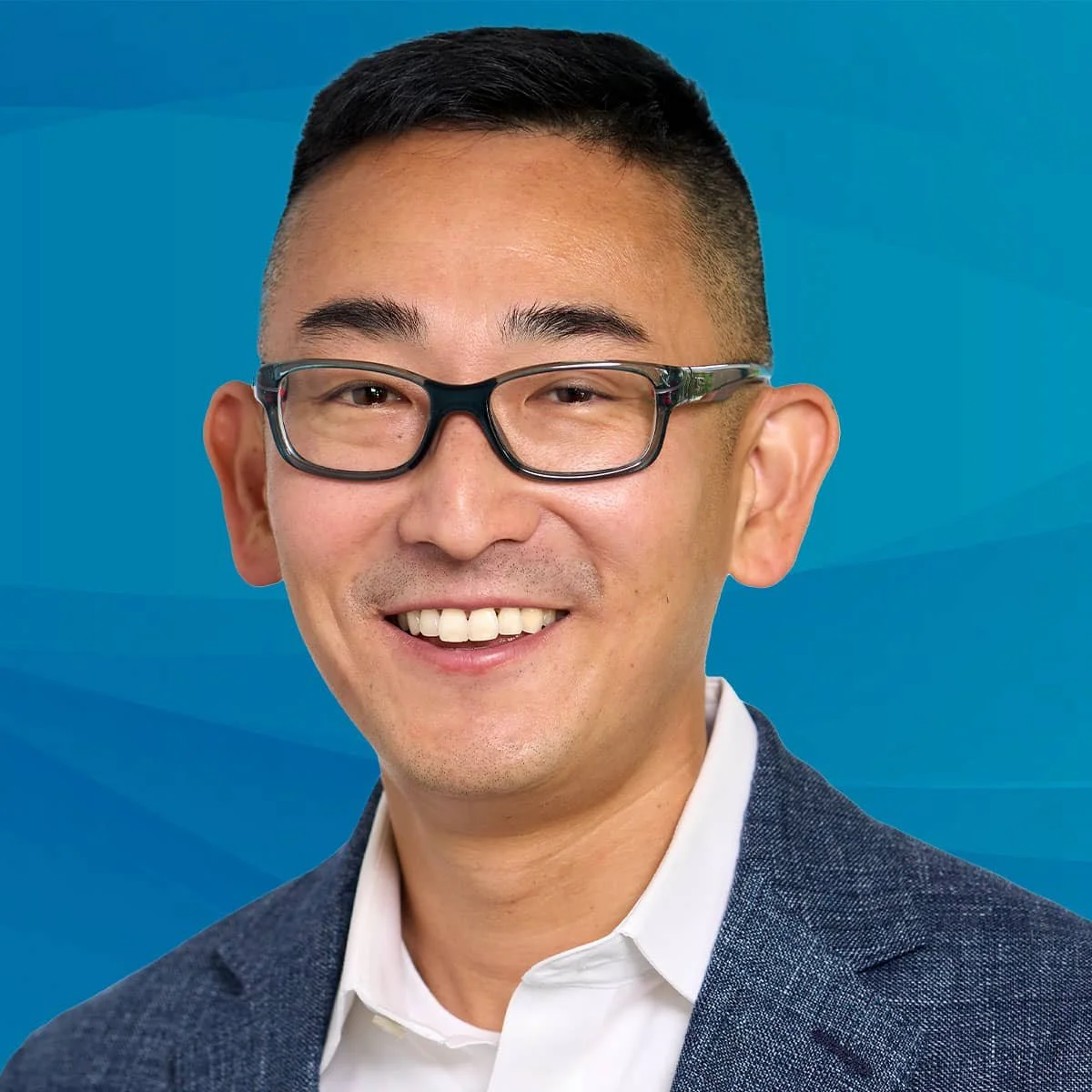
Albert Cho, Vice President and Chief Strategy and External Affairs Officer at Xylem
Listen
If water is critical for economic growth, then why don’t we prioritize it in our planning?
Albert Cho, Vice President and Chief Strategy and External Affairs Officer at Xylem, joins John to explore why water security is foundational to economic growth, and how our planning doesn’t reflect it. From AI and infrastructure to basin-scale governance and disaster resilience, Albert explains how rising demand and system constraints are reshaping water challenges across the U.S. He also discusses why the biggest barrier isn’t innovation, but adoption, and how better planning and coordination could unlock significant amounts of water already within existing systems.
“ Trying to approach the problem the same way and planning for infrastructure in the same way is literally the definition of insanity. It is going to condemn us to a future of water insecurity.”
Key Topics
Water Security and Human Security: Why access to safe, reliable water underpins health, economic growth, and daily life.
What's Missing in AI Infrastructure Planning: Why water is rarely a primary factor in site selection, even as new infrastructure drives significant demand.
“Potential Water” in Existing Systems: The opportunity to reduce leakage and expand reuse to access water already within infrastructure systems.
Fragmentation and Basin-Level Coordination: Why water risk doesn’t respect political boundaries, and how decisions in one community can impact the entire basin.
Rural Systems and Regionalization: How smaller communities are working together through regional utilities to share resources, reduce costs, and improve service.
Innovation vs. Adoption: Why the challenge isn’t a lack of solutions, but how to implement them at scale.
Links to Relevant Studies and Resources:
Learn more about Xylem and how it helps solve tough water challenges
See Rethinking Resilience, the report with Global Water Intelligence, which shows how rising temperatures are increasing the intensity of extreme weather events threefold
Learn more about OpenET and their models for evapotranspiration across the United States
See EJ Water Cooperative as an example of regional water system collaboration
Al mentions the Water Infrastructure Modernization Act and efforts to encourage adoption of innovative solutions
Learn more about the EPA Environmental Finance Advisory Board and its recommendations on water infrastructure investment
Further reading
NOAA’s Billion-Dollar Disasters Report on the rising frequency and cost of extreme events
See the book Al references: Blindness by José Saramago
“We don’t have an innovation problem, we’ve got an absorption problem.”
Transcript
START (AUDACIOUS WATER EPISODE 7, SEASON 5 WITH ALBERT CHO)
JOHN SABO: Welcome to Audacious Water, the podcast about how to create a world of water abundance for everyone. I'm John Sabo, director of the ByWater Institute at Tulane University.
On today's show, water security, economic growth, and planning for a future where water is more in demand but increasingly constrained.
My guest today is Al Cho, vice president and chief strategy and external affairs officer at Xylem. Al has spent his career focused on how innovation can drive sustainable development both in the US and the developing world. We explore what it means to build a water-secure future, from how we think about risk and resilience to what's holding us back, and what it takes to plan for growth with water in mind from the start.
Al, welcome to the show.
ALBERT CHO: Thanks, John. Good to be here.
JOHN: Let's start with a softball pitch that I start with often, which is kind of focused on how you got into the water business. But I just want to note for the listeners that we both spent significant time in Arizona and in Tempe, in a place that I raised my kids and know very well from my time at Arizona State. Talk to me about water, how you got into it. Did you think when you were a kid in high school that you were going to be in the water business?
ALBERT: I didn't. In fact, that's probably the last thing I would've thought of. Funnily enough, my dad worked in the water sector. He was a soil agronomist and studied the movement of pesticides through groundwater, and ultimately ended up working for a water utility in Arizona for many years.
And I thought he had the most boring job in the world, because when you're a kid, unless your dad's like a ballplayer, you think your dad has a boring job. And you know, I thought I was going to be a lawyer or work in international trade when I was in college.
And then I had the opportunity just after college to go to the World Summit on Sustainable Development in Johannesburg with the State Department, and while I was there, I was just exposed to all of the great work that American companies were doing around sustainability and innovation, and I thought, "Hey, that's something I could spend my career doing."
And, it kind of redirected the rest of my career toward working on sustainable development through the application of technology. And so whether it was at McKinsey or at Cisco or the State Department, that was kind of a red thread that kind of ran through my career. It’s really wanting to understand: how do you create the right ecosystem for technology, especially industrial technology, to have an impact on sustainability at scale.
And when I was thinking about leaving the State Department, I saw this opportunity at Xylem to join in strategy, and I thought, "Holy cow, that's really cool." I'd done a lot of work in the power sector prior to that, and I thought, well, water can benefit from the same innovations that are affecting the energy grid around intelligence, around data analytics, and this is a sector that's really ripe for that kind of innovation.
And Xylem at the time was a new company, and I thought this would be a tremendous platform to try to create an impact in a sector that really matters, and that's how I ended up coming back to water.
JOHN: That's amazing. Thanks for detailing that arc because I think that arc is really important for listeners to understand as we go through this conversation.
ALBERT: John, I would love to turn that question back on you and ask, how did you end up in water and doing this podcast?
JOHN: It's interesting. I want to riff on your dad has a boring job. My dad was a lawyer, and I didn't think his job was boring, but we went fly fishing together a lot in the state of Colorado, headwaters of the Mississippi, where I'm working now.
And you know, I never thought that I would end up in water because I was fly fishing, but one thing led to another through my whole career path that got me to school fisheries after I went to undergrad. In undergrad, I had a great opportunity to do field work with a mentor, David Lodge, who really kind of showed me the path, he and his grad students, to graduate school.
I went to school fisheries, went to Berkeley for my PhD, which was focused on rivers, and I've just kind of followed my nose through that. Unlike your story, it was kind of meant to be from the beginning but I didn't realize it.
ALBERT: That's terrific, and it sounds like you've spent your career at two of the great water cities in the States: in Arizona, in the Phoenix area, and now out there in New Orleans. So that's pretty cool.
JOHN: And that's spot on to how we might dive into this conversation. In fact, today I'm going to be leading a Hill briefing where I talk about those two places and how the crisis that each one faces, if we want to call them crisis, I don't really like to use the word crisis that often, but the challenges are very different, too little, too much, right?
And so we often talk about droughts, floods, and water quality as separate things. And I also like to think about drinking water, wastewater versus floods as different things in the public perspective. But I think one of the things that the National Water Strategy really does well is combine them into symptoms of a deeper water security problem that we have in the US.
So talk to me about water security broadly and what this shift in the National Water Strategy perspective changes about how we respond.
ALBERT: That's a great question, and I think it's important to put water security kind of in the lineage of a lot of other concepts that matter. I think of water security as the water analog for human security, right?
Or you've heard terms like food security. It's a very human-centered concept, and at some level it's a different way of thinking about what others have talked about with One Water. No longer just thinking about isolated systems of drinking water or wastewater or droughts or floods, but really thinking about how those different thematics connect in a single concept.
And in fact, here at Xylem, a couple of years ago when our new CEO came in, we reframed our corporate purpose around water security to empower our customers and communities to create a more water secure world. And the reason we did that was because water security is that kind of broader frame that helps people understand how the different threads of water management connect into something that matters to people.
And so, if I think about the most basic definition of water security, there's a really good one in the report, but I think about it as having the right water in the right place at the right time, at the right quality.
And increasingly, when you think about it from a human perspective, it's at the right price, right from an affordability perspective. That's a great concept, but it's harder to achieve than it sounds. You know, if you think about it in the US, these concepts are all kind of connected, right?
Where you have greater heat and more drought, you've also got systems that have less water and more turbidity and more risk of things like harmful algal blooms. You know, here where I live now in DC, about a year ago, July 4th weekend, there was a boil water alert because the water coming down the Potomac had kind of shrunk in volume.
It was a really hot week. There was a higher level of turbidity, and there was some risk that the treatment plant wouldn't be able to take out everything it needed to, to ensure a safe water supply for people. So water quality, water scarcity, those things are connected. And frankly, so is flooding.
In the United States today, on average, I think the report calls this out really well. You see about thirty billion dollars in annual flood damage. And one of the connective threads to all of this is that we are in a situation where we're recording higher temperatures each year. And we put out a really interesting report with Global Water Intelligence, I think it was late last year, called Rethinking Resilience, and what it showed was that as temperatures increase, the intensity of extreme weather events has actually tripled even over the course of the last decade.
It's a really scary chart. When you look at the intensity of floods and droughts and combine that index, a higher heat environment leads to a multiplication of the intensity of extreme weather on both sides, droughts and floods. And so when you step back and look at the fact that, you know, of course, infrastructure exists to meet human needs and to make them invisible in a way.
You succeed when people don't ever have to think or worry about the tap turning on or the toilet flushing. Those systems are very capital intensive, long-lasting, and brittle, and so you kind of design them for a reasonable range of outcomes. But when the range of outcomes increases significantly, you can't actually build for the full range of extremes without significantly impacting that other element of water security, which is affordability.
And I can talk a little bit more about the economic analysis we did there, but these connections between exogenous factors like the environment we live in, the practice of our profession, which is around how we plan and design systems for variability, and then the very human factors around affordability.
Those are what make water really interesting. And what makes water security such a compelling challenge, I think, for our generation to tackle.
JOHN: So much to unpack there. I love it. One thing that I kind of want to hit on just for listeners who aren't water wonks like us, and hopefully there are many listeners like that, is the term security itself.
You mentioned resilience. We talk about sustainability, sustainable development, and then there's this word security, which we're now tying to water. And I like the word security, but talk to me about why it's so important to think of it as security.
ALBERT: I think it's a really important question because the frame of security makes it clear to everyone why this is a shared objective.
That for our communities and the people who live in them, to live a secure life requires that the resources that underpin human health, our economy, our way of life are protected. I think it's not a stretch to imagine, especially today, there are societies in the world that depend entirely on centralized, desalination plants for their water.
And if those plants are damaged, you can imagine very quickly the impact that that has on a society, right? In some situations, there are hours or days of storage, and if water supplies are disrupted, society can fall apart.
One of my favorite books is by José Saramago, who was a Nobel Prize-winning writer – he has a book called Blindness, which is what happens when in a community, everyone loses the ability to see. And it's this very simple thing that we take for granted, is the gift of sight. And the brilliant thing about the book is that this very simple thing that's taken away, society lives in filth, squalor, violence, and disease within days.
And that's at some level a really good analogy for what happens when water is taken away. It's this thing that we depend on, but within hours or days of it being taken away, we would be living without really urgent intervention in violence, disease, squalor. It's why attention to this basic form of infrastructure is so important to the concept of human security.
JOHN: That's a great answer. I love it. And great that you brought in that book. It's a great analogy to share with the listeners. You mentioned the economy earlier, and we're going to be focusing in the Hill briefing today on the economy piece of the National Water Strategy. And there's something I've been kind of toying with, which is the idea that if water is truly foundational to economic growth, let's think about it for semiconductors, energy supply, but we still treat it as an afterthought in economic planning.
It's kind of downstream, to use a bad pun of economic planning. Tell me what it would look like to elevate water security as a core driver of economic development and growth.
ALBERT: Great question, John. I'm going to return with a little bit of a peeling-behind-the-curtain on this podcast. It took us a little while to schedule it.
We were kind of talking through different questions and I threw John a little bit of a curveball at the end saying, "Oh, could we frame it a little bit differently?" And he got back to me with some, you know, illustrative questions that we might discuss, and I was looking through them, and I saw the tell-tale em dash, and it made me think, "Oh my gosh, I think John used AI to create these questions."
And it gave me a deep sense of relief because at the same time, I was using AI to kind of think through, like, what are some things that I might want to mention during the podcast. And so, even in the context of this conversation, we were both using one of these new themes that's disrupting our economy, and I'll get to why that matters to water in just a second.
But, you know, we did a study with Global Water Intelligence a little while ago around the impact of AI and the new economy on the water sector. And I thought that's illustrative because, you know, AI is the single biggest capital investment in history, right? The data centers, the semiconductor fab build-up, the power infrastructure, all of this is driving the single biggest from a just volumetric perspective, economic transition that we've ever seen at a pace that is unprecedented.
And it has a tremendous impact on water. Our analysis suggests that at full potential in 2050, AI could consume the equivalent of an additional 12 and a half million olympic-sized swimming pools of water, right? At the current pace that we're adding infrastructure, we're adding new water demand to the system, which is used not just in the data centers that people are talking about, but actually our report shows even more significantly in semiconductor manufacturing and upstream and power generation to fuel data centers.
So this huge economic transition is being coupled with a very significant increase in water demand everywhere that AI is implanting itself into our communities. And so you would think that given the centrality of water to the AI ecosystem, that water would be the first thing that people talk about.
But you can just see from public discourse on AI to know that it's actually one of the last things that people consider in site selection or in planning. Because what really matters to developers across the value chain, whether it's semiconductors or data centers, are things like the availability of land, the availability of energy, access to high-speed internet that connects to urban centers. And then from a geophysical perspective, things like the seismic stability, or from a political perspective, the regulatory stability of an area over time.
Water is important, but it's not one of the first planning considerations. And as a consequence, we're seeing the development of AI infrastructure in places that are quite dry.
I think our report showed that something like forty percent of semiconductor fabs and around a third of data centers are being built in places that are already classed as being high water stress. And that's a challenge because what we're doing is adding an incremental demand of water to a set of infrastructure systems around water and wastewater that have already been underinvested in, in many cases, in areas where water's not, like, elastic.
You can't just conjure up more water. And so that's fueling a degree of social tension and mistrust. You can see it in local papers around the country, especially in smaller communities that haven't had to deal with this before, which we can talk about when we get to other parts of the report. So I think what it would look like for water security to be elevated as a core driver of economic and development and growth would be for water not to be the ninth or tenth consideration in planning for this single greatest capital investment in history.
But it's not the only one. If you think about lithium mining or, you know, other new drivers of economic growth, a lot of these things place demands on water systems and on communities. And I think the world would be better if we moved from a situation where we're planning these billion-dollar investments and just assuming that the water will show up, to one where we bring community stakeholders around the table early on so that the planning of water infrastructure and water needs happens in parallel with other forms of economic planning.
JOHN: Super interesting, and that reminds me of almost like manifest destiny, right? Like build it and the water will be there, was kind of the principle of sending people out to farm and it's, you know, the rain will follow the plow, was the manifest destiny principle of Western expansion. One thing that I wanted to follow up on that I think is maybe interesting, and given that we both have spent significant time in Arizona, obviously an epicenter of this build-out that you're talking about.
I mean, you've got Intel, you've got TSMC moving in and a lot of hyperscale, right? I think all the big players have data centers in Phoenix, and so it's all there. And I want to say too that we have hyperscale in northern Louisiana, which is a place that doesn't have aridification happening, but does have periodic droughts.
But coming back to Arizona, really interested in something that a colleague of mine from the U of A used to say, Robert Glennon, who you may know. He used to say that the stress on water supplies is going to force water to move uphill to higher value uses. And so when you're talking about this massive build-out of infrastructure, is it going to replace water use for agriculture, and what are we going to do in that case?
You talked about food security before.
ALBERT: It's a great question, John. I want to step back a little bit from the specifics of Arizona because…
JOHN: No, that’s fine.
ALBERT: Every basin is different. I think your broader question around water flowing uphill into higher value uses is a terrific one.
One of the other elements of the research that we did was to look at, okay, so assume that you're going to need another, you know, 12 and a half million olympic-sized swimming pools of water. Where's that water going to come from? And you know, it's one of the blessings and curses of water infrastructure and the sector that we all work in, that we're blessed to support the growth and development of the economy, but we're cursed that we don't control it.
Like, whatever happens, like in economic transitions, the water sector ends up needing to support. And that can happen in disruptive ways, and that can happen in thoughtful ways. I think if we look at trying to find new water for data centers and for semiconductors and for upstream power in AI, the best place to look is actually in the trapped water that exists in the way that we operate infrastructure systems today.
The research that we did showed that, yes, we're looking at an incremental, you know, call it 30 cubic kilometers of water in the next 25 years, but there's 100 cubic kilometers of water a year trapped in the leakage from distribution networks. And there's 300 cubic kilometers of water trapped in the form of wastewater that isn't being recycled.
And so the first and best place to look for incremental water supplies is to release what I call the potential water that exists in the infrastructure systems that we've got. And in the analysis that we did from an economic perspective, those happened to be some of the cheapest sources of incremental water for the sector.
You know, there's a good anecdote in the report that looks at TSMC, the chip manufacturer in Taiwan, which I think in June of 2021 had a severe drought, and they were trucking in water in order to manufacture these chips that everyone in the world depends on, right? because they just didn't have water.
And so they were hiring fleets of trucks to bring water in. And over the course of the quarter, that climbed to almost thirty million dollars of trucked water expense. And they haven't released figures, but if you kind of do back-of-the-envelope math, I guarantee you the per unit cost of water that was being used as an emergency input was significantly greater than the cost of investing in the systems that would be required on a global scale to tap into that trapped water or that potential water in leakage reduction and in wastewater recycling.
And there's a good example of where we partnered with Amazon Web Services in Mexico City and Monterrey to put together a project where we implemented a digital twin of the water infrastructure that helped save a significant amount of water at, again, a very low cost. And it's those kinds of partnerships that I think can help unlock water in a way that stops this from being a combative situation where stakeholders are being pitted against each other, but where we can really look for water in the most rational places first to accommodate growth in AI infrastructure.
JOHN: Coming up, Al and I talk about basin-scale water management, why rural and urban systems are more connected than we think, and what's holding us back from adopting the solutions we already have.
JOHN: Super, super interesting. I want to follow up with you after the interview with the Mexico City digital twin because I have some interest there.
And let's move on to governance. And just for context, you know, I moved from the Colorado River Basin, where I often joke that there are more people studying water than molecules of water, to the Mississippi River Basin, which drains 31 US states. And in my view, water management and climate adaptation planning requires coordination across water systems, and that water system is huge.
So the question is not necessarily for the Mississippi, but you could take a smaller example, if you like. What does effective basin-scale governance look like? And how do we communicate that to the government?
ALBERT: It's a really challenging question. And I'll maybe start by making it real, right, which is just continuing on the conversation with data centers.
You know, I was just hearing about an example recently where there was one community that had basically declined a data center project because they were worried about the impact that would have on their water supply. But there's non-contiguous political boundaries between the water utility and that authority, and the next town over, which had a different view of those trade-offs.
And so same basin, same watershed, the data center went in, you know, a couple miles away, with the same hydrological impact in the area that one town was afraid of and the other town wasn't, right? And so you know, the straw moved a couple hundred feet. It was a little more than that, but it ended up having the same kind of a net effect on the watershed. And that kind of goes to underscore the complications when you have a lack of basin-level coordination and just differences in the political boundaries of folks who make decisions about economic development versus the water needs of a watershed and a basin.
There's some inevitable tensions that arise from that misalignment. I'm an optimist. I think that one place to start is in shared basin data platforms. I think the first place to start in a conversation is to make sure that you guys are actually talking about the same facts, right?
Because if people have different frames that they're bringing to a discussion about what's good or bad, and you're not talking about the same underlying facts, then it's very easy to talk past each other and very easy for things to become emotional or psychological rather than a discussion about what works and what doesn't.
JOHN: Even in your example, this is true, right? Like, if those two communities had been able to see the outcome of another community next door getting the data center and the same impacts, they might have done differently, right?
ALBERT: That's right. And I think we're beginning to see a lot of really cool innovation and evolution there.
I was on a panel with NSF recently reviewing some of the recent innovations that are happening in basin-scale data modeling. And some of what is possible now in terms of creating integrated models for mapping watersheds and hydrology are light years ahead of where they were even a couple of years ago.
And I think what we're beginning to see, and I'm really optimistic about this, is the ability to fuse layers that will enable people to make watershed-based decisions in an integrated way, and actually create shared facts around things. So you know, two examples that I really like are, this integrated kind of watershed mapping tool.
And then an initiative that a nonprofit organization created called Open ET, where they have basically developed really good models for evapotranspiration that cover the whole United States. And you know, I think it's working on a near real-time basis now. And so all of these different hydrological variables that matter to communities, you can start to develop fact bases that help people understand what are the implications of decisions that are being taken.
I think the benefits from creating basin-level coordination based on shared fact bases are clear. You can start to get much better coordination around where you put infrastructure, whether you allow certain kinds of development that impact the whole basin. But I think ultimately, it can also drive down the cost of investments in things like resilience.
You know, allowing cross-border flexibility, regional integration of systems, that's one of the kind of real ways and options that communities have to lower costs, is by collaborating with people around them across the basin. And I think shared data models, shared cooperative agreements, and institutions for basin-level governance create the platform for those kinds of trades that make everybody better off to become possible.
Because at the end of the day, water risk doesn't respect political boundaries. But as long as that water risk is just kind of abstract and diffused and people don't have common references to, you know, measure and discuss, we're not going to be able to take full advantage of the opportunities of regional coordination.
JOHN: Well, super interesting. I could spend a whole episode on the digital twin and the advances in hydrology with data science especially. Not just AI, but there are many different kinds of data science there that you have to apply to get to those points of being able to show people, non-experts, what the trade-offs are in real time.
So maybe in a follow-up episode, we'll come back to that. I want to move on to the rural piece. I love your optimism, and I wanna say that I was very optimistic when we were discussing rural water during the formation of this report, in particular because in our country, there's a political divide between rural and urban areas, right?
And it's pretty strong. But the report seems to point to this idea that water in rural locations is source water for cities, and rural communities are the stewards of that land and that water, and that includes agriculture, I think. And when we kind of take that step back and look at the connectivity between that, I think it gives us some optimism for coming together on something that should be a core value.
So talk to me about those differences and, and what your perspective is on how we move forward with integrating rural water systems with urban water systems.
ALBERT: It's a great observation. I really like the way that the report bridged those two different worlds. You know, I think you see that in the bipartisan political support for continued technical assistance, for example, for rural water.
I think that's one of the real bright spots, is that we see consistent support from a bipartisan group of senators and congressmen, as well as both of the two most recent administrations, the Trump administration and the Biden administration, for making sure that we're paying attention to the health and resilience of rural water systems and rural communities, which, you know, as you noted, has a really important impact on water services for everyone.
And so, that for me is an area where there's a lot of reasons to believe that things will continue to improve. Even as we're talking today, there's a conference happening between RCAP, the Rural Community Assistance Partnership, and the National Rural Water Association on a new report they just put out, which I was talking about with them yesterday, around what they call healthy regionalization.
This idea that rural communities operate at scales which sometimes leave opportunities on the table that could be unlocked through regional coordination. They lay out some really important principles for how to unlock that shared potential in a way that is voluntary and cooperative. But the benefits are so clear from cooperative re-regionalization in rural areas.
Cost savings from procurement, from shared back office consolidation, from the ability to expand system capacity without having to build a lot of new infrastructure by leveraging the resources and the assets that each community brings to the table. I mean, those opportunities are huge, and it's beginning to gather momentum.
I think RCAP and the National Rural Water show that there are already four thousand six hundred and fifty fewer rural community systems today than there were at the beginning of the century, in part through cooperative regionalization. You know, organizations like in the lower Rio Grande River Valley in New Mexico, right?
Or the EJ Water Cooperative’s work in Southern Illinois, right? Of really small communities deciding that even though their football teams compete on weekends, that it's a really good idea for their water systems to work together every day. And that in doing so, they're actually able to deliver higher quality services that support regional economic development and also protect public health.
And I think one of the real opportunities for strengthening rural ecosystems, rural communities, and the rural economy is by continuing to support cooperative regional utilities in rural areas. And I think the thing that underpins them is technical assistance. Really to support these smaller utilities in smaller communities to understand the full range of options that they've got to really unlock the potential of water services to support health, economy, society.
The crux of it is, you know, we do depend on healthy rural communities to support the water system, but right now I don't think we're funding them enough to sustain it, and that's where I think the continued and sustained technical assistance that we're seeing, again, supported on a bipartisan basis, is so important.
JOHN: I love the work that RCAP does on re-regionalization, and in fact, it's a really good segue because I'll have Olga on the show in two episodes.
ALBERT: Okay.
JOHN: So we'll dig deep into that, so thanks for bringing that up. Moving on to disasters and infrastructure, lions, tigers, and bears, oh my, if you will.
NOAA reports that a billion-dollar disasters, single cost billion-dollar disasters have risen in frequency from three to twenty per year since 1980. What keeps us locked into that reactive disaster cycle? And why can't we be proactive about it? And what would it take to be proactive about it?
ALBERT: Well, first of all, I'm so glad you're going to have Olga on to talk about rural. She is absolutely terrific, and I think is, you know, part of the heart and soul behind the Aspen Institute's work on rural. And in the same way, Melissa Roberts' work at the American Flood Coalition is why I think similarly, a linchpin to thinking about how to improve water security from disasters.
Look, I think there's a saying that says, "Failure to plan is planning to fail." And I think unfortunately, we've got a lot of factors that conspire to make it very difficult to plan for resilience in water, both for flooding and for droughts. I think the two elements of the solution to me are really expanding the range of solutions that we deploy to help us plan and anticipate extreme weather.
And the second is to think about partnerships. So going back to that research that I talked about from GWI that we did, called Rethinking Resilience, one of the kind of core features that we discussed is infrastructure systems plan for a certain range of outcomes. But because of changes in the external environment, we've now got to become a lot more obsessed with the fat tails in the probability distribution.
It's what we call a kind of kurtosis. And the fattening tails in the distribution of water outcomes mean that our infrastructure systems have to be able to absorb a lot more variability than ever before because, again, as temperatures increase, the intensity of water-related disasters, again, has tripled in the last ten years.
And so what does that mean in practice? If we were to take the same approaches and just try to accommodate the fatter tails by, you know, making sure that our systems were now able to accommodate an even wider range of outcomes, the annual capital spending required to achieve that level of adaptation is, like, almost four times as high as it is today, right?
And that's in a system where we can't even mobilize the money to fund the infrastructure needs that we've got. So that's crazy, and it's not going to happen. And so trying to approach the problem the same way and planning for infrastructure in the same way is literally the definition of insanity, and it's going to condemn us to a future of water insecurity.
One of the things that the report found is that there are a lot of solutions in place that we know could work if we adopted them to help us absorb those fat tails in more adaptive ways at a significantly lower cost. And it models out that, you know, the cost of adaptation falls by over fifty percent if you take on some of these newer approaches to absorbing variability.
And so those include things that you've heard of, like nature-based solutions, protecting watersheds, building nature-based approaches that have dual uses, right? Parks and soccer fields that become sponges for cities that have more water coming at them. Another area is digital infrastructure, right?
Really getting good at anticipating, modeling, implementing early warning systems to enable, you know, quick reactions and response that can lower the damage from extreme weather. Things like digital twins of floodplains that help, you know, think about where the interventions are going to be most impactful so that you can prioritize the capital expense to create the greatest reduction in expected losses.
So I think really painting with a broader palette of solutions, whether that's digital or green or gray or, you know, a synergy between all of them is really important to achieving comparable levels of resilience in a way that is still affordable. Because if we don't make that pivot, the costs of adaptation will be too high, and we're going to be left in a situation where people are left exposed.
You know, I think the second component is really thinking about creative partnerships, including with financial institutions, insurance companies, et cetera. I was at a really good convening that the World Economic Forum did a couple weeks ago in New York, where we brought together leading banks, insurance companies, reinsurers, technology companies to talk about, you know, in what ways can we monetize risk transfer from water-related risks.
And I think the message there, just as, you know, frankly, the message is true for hyperscalers, is that the institutions that have all of these resources are actually far more able and willing to partner than we give them credit for. But it's about creating the forums for dialogue, like the Aspen Institute is doing here, to get people to, you know, have conversations around a common set of facts and really figure out if we planned better and if we collaborated better, you know, are there ways of channeling the funding that we do have in a way that reduces risk for everybody and makes everyone better off?
And so I think those are opportunities. I know Melissa is way smarter about disasters than I will ever be, but from my perch, that's where I see the opportunity.
JOHN: Fantastic. Just a quick story, given our Arizona background. I remember when I was living there, there was a, you know, sometimes in the fall, Phoenix and that area gets Pacific hurricane tail rainfall; that's epic, right?
I remember one epic storm driving through a suburb where there was a park, just like you talked about, that was designed to be a sponge for capturing rainfall from the community, right? Filled to the brim, and there were kids kayaking and slam dunking basketballs on basketball hoops. There was that much water in it.
So sometimes we look at that infrastructure and think, "Oh man, what a waste of land." But it does serve its purpose, and it will increasingly serve its purpose, and probably we need a lot more of it. I want to give you a plus one for the infrastructure portfolio, and also to call out something that I thought was fabulous in the report, which is that they call out, built natural, social and cyber infrastructure as sort of an integrated solution, which is what you kind of hit on before.
And that's certainly something that we work on a lot at The Bywater Institute, is trying to figure out what that looks like, and so I'm glad that you brought that up. Let's move to the innovation piece, and just, you know, briefly, I know that at Xylem there are a lot of people that work in this space, so I wanted to ask you kind of a broad question about how the report tackles innovation.
It's not that we need more widgets. It's that we've got plenty of widgets to solve problems, and you mentioned some of them, like NBS. But there's an adoption challenge. Talk to me about adoption.
ALBERT: Yeah. John, I am so glad that you raised that because I think that's the top-line message; is we don't have an innovation problem, we've got an absorption problem.
You know, this week here, actually in the building that I'm in right now, we've got the innovation labs team at Xylem, hosting their annual symposium of all of the cohort companies in our innovation accelerator, and when you look around, you realize, this is not a technology constraint. We've got some really brilliant people every year coming up with solutions that are game-changing.
But you step back and you look at the fact that there's a lot of other technologies already available that could materially improve our current situation, and they're not being adopted at scale. It's quite slow. I did an analysis a couple of years ago that looked at how long it takes new innovations in smart water to achieve eighty percent penetration in the US utility sector?
And the answer was on average, like, thirty years, right? Because the challenge, again, isn't that people aren't coming up with great ideas. They're being adopted across the economy, but it takes longer to penetrate into our highly fragmented, resource-constrained, highly regulated industry for a mixture of good and not so good reasons.
The good reasons obviously are an appropriate degree of caution-
JOHN: Public health,
ALBERT: Yeah and stewardship from the people who run critical infrastructure, and that's to be applauded and we owe them our gratitude every single day. The not so good reasons are, you know, the fragmentation, the regulatory barriers, and the fact that in many cases, people are so busy fighting fires every day that there's not a lot of extra absorptive capacity to adopt new innovations, because that takes time as well.
And so there are things I think that can be done to shift that situation. One of them is obviously technical assistance. I think utilities and other water organizations benefit when they've got trusted technical assistance providers that are bringing ideas and innovations to help them operate more sustainably.
I think that a red thread through here is that if we're going to make a big change toward a more resilient and adaptive water future, continued support for technical assistance is really important. Another, I think, is you've also got to create incentives, and I don't just mean financial incentives.
I mean just incentives that accelerate the ease and awareness of adoption in order to encourage people to take that extra time and that extra step to consider a broader range of solutions when they're solving a problem. There's one piece of legislation that we've been supporting called the Water Infrastructure Modernization Act that really focuses on, you know, using the state revolving funds to prioritize projects that have an innovative component, including intelligent infrastructure.
And I think all of those things are nudges that really help people say, "You know, hold on, my options aren't A, B, A and B, they might be A, B, C, D, and E. And, you know, there's other things that we weren't looking at before that might have a very different risk return profile than what we've looked at before." And, so I think those are important.
Also, on the EPA's Environmental Finance Advisory Board, which I worked on with a number of other people, some of whom were actually in the Aspen report as well, there's a range of recommendations that we made around encouraging adoption of money-saving innovations that also have a complementary public health or environmental impact.
And I'd encourage some of your listeners to check those out because I think they were very well received.
JOHN: That's great. We'll make sure to have those in the show notes. Okay, full arc, coming back to the beginning of the conversation because we're almost at a close, and this could be three PhD dissertations, this question, so I want you to take one swing at it, an executive summary kind of thing.
So what does a water secure future actually look like in practice? So what combination... We talked about policy, infrastructure, technology, rural versus urban. What do you think are the best next steps?
ALBERT: I think the example of Singapore gives us a really good reference because it's a country that's taken water as a national security threat and turned it into a source of sustainable advantage, right? Where the country has resolved, or is on a path to resolving many of its pressing water challenges and has actually turned into a lighthouse for the region and for the world around innovation in water.
And I think it shows the importance of having a national water strategy, and it's one of the reasons why I think the Aspen Institute's work has been so important here, is that you've got to frame the problem and lay out solutions that people can buy into and then drive collaborative action.
And that happened in Singapore. I'm optimistic that that can happen in the United States. But I also want to answer the question in a different way, which is how does it feel when you have water security? And I shared this with some people at the One Water Summit, but I was in Switzerland not too long ago, and I was staying at a hotel on the banks of the river in Zurich.
And right outside of the hotel, there was this bar. It was like a Thursday afternoon. People were, like, drinking beer, having, you know, food and taking off their clothes and jumping into the river and swimming. And it was like this really wonderful environment. And one of my colleagues dared me to do it.
And so, of course, I did. And it was the most amazing experience. Growing up in the United States, you know, where I'm sitting about fifty feet away from the banks of the Anacostia, like, you don't think that a river is a place where you can swim. You think of it as something that you have to be careful of touching.
And the experience of being able just to take off your clothes, jump into a river, and not worry about what, you know, whether it's hitting your face or not, was such a personally transformative experience. Like, just the joy that you can feel from interacting with nature in an unmediated way, and that's not constrained by fear or unease about disease.
I mean, it's something I wish every American could feel, is that sense of freedom because the reverse face of water security is freedom. You know, the freedom from fear and disease and uncertainty about your water. And I think ultimately, that's what a water security future means to me.
It's when water becomes visible to policymakers and to people, not as a source of disease and uncertainty and restraint that we have to be concerned about and plan around, but it becomes a source of, you know, excitement, prosperity and joy like it was that afternoon for those people who were there.
And we've got a long way to get there in the US but I think if you look at the different frames that the team spent a lot of time talking through over the course of this report, and I give Martin and Newsha a ton of credit for herding hundreds of people's divergent opinions on this. I do have some optimism that we'll get to a place where we can all jump in the river and have a great afternoon together, so.
JOHN: Well, as an optimist myself, I'm very grateful for that optimistic answer. And I think that's a good place to close the conversation. Al, thank you for joining me and I look forward to following up with you on some collaborative ideas.
ALBERT: Terrific. John, thank you so much for the invitation.
JOHN: Okay, that's a wrap. To be honest, I don't even need to do an outro for this episode given the note of optimism Al ended on. I hope others can harness this optimism to transform water security in ways that Al and Xylem are already doing.
So I'll end this episode with a question: how can we leverage lessons learned from countries who embed water directly into their national identity like Singapore and scale this in a country as large and diverse as the United States?
That's it for this episode of Audacious Water. If you like the show, please rate and review us and tell your colleagues and friends. For more information about Audacious Water and to find in-depth show notes from this episode, visit our website at audaciouswater.org. Until next time, I'm John Sabo.
[47:50]
END (AUDACIOUS WATER EPISODE 7, SEASON 5 WITH ALBERT CHO)